
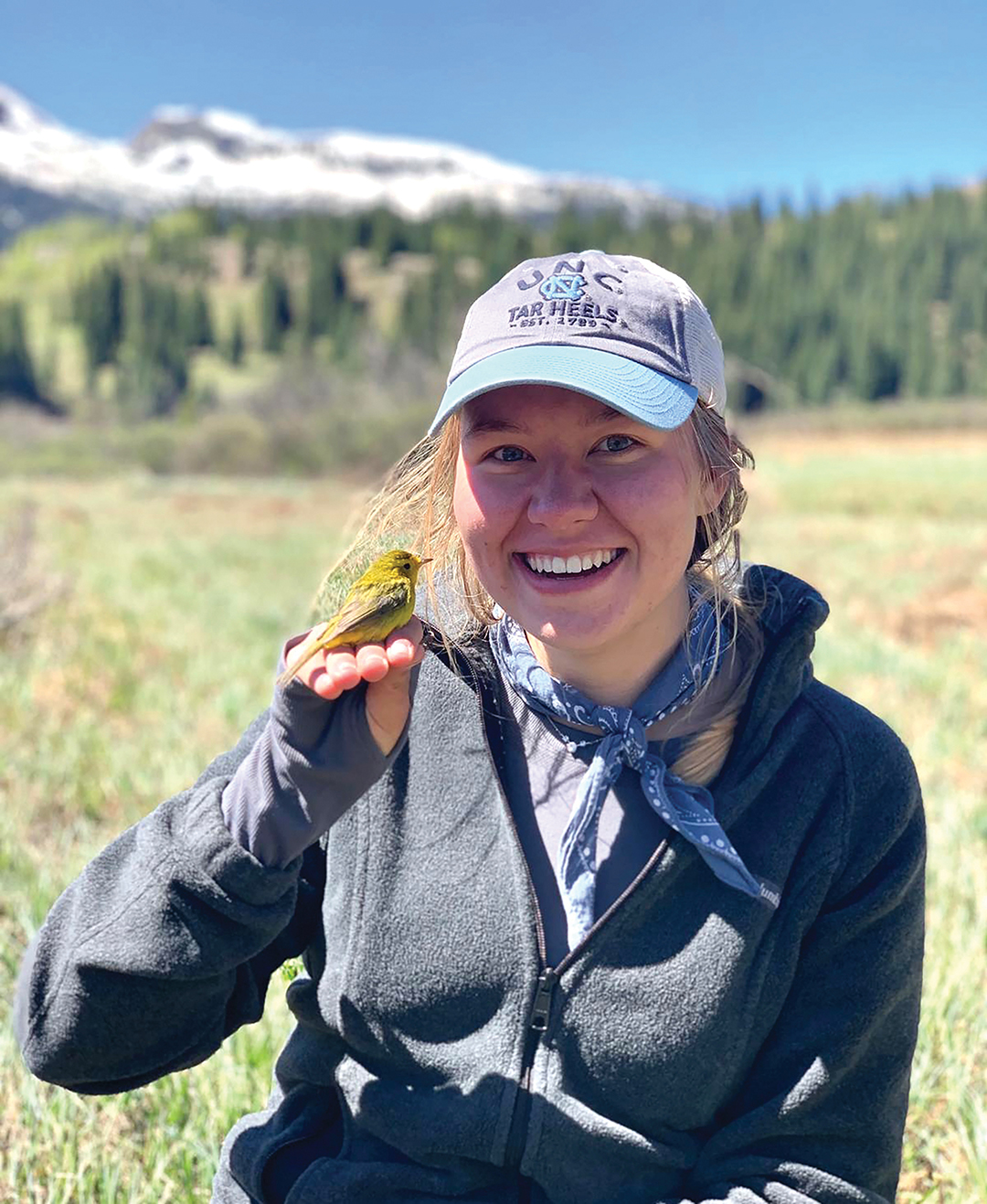
Anna Boodée
Each year, the Highlands Biological Foundation helps bring new discoveries to life through its Grants-in-Aid of Scientific Research program. For over 50 years, these member-supported grants have funded students and research scientists conducting projects at the Highlands Biological Station, part of Western Carolina University. By supporting this program, HBF donors help advance understanding of the extraordinary biodiversity of the southern Appalachian Mountains.
This year’s GIA recipients explored topics ranging from microplastic pollution to salamander communication and wetland restoration—each contributing new insights into the complex ecosystems surrounding Highlands.
UNC-Chapel Hill undergraduate Anna Boodée investigated how wetland restoration impacts wildlife in Franklin. Using acoustic monitors, she compared bat and frog activity between restored and unrestored wetlands and found that the restored site had the highest species diversity and activity levels. Her findings suggest that restoration improves habitat quality and supports richer, more resilient wildlife communities—critical information for conservation efforts in the region.
Another UNC-Chapel Hill student, Erin Flanagan, examined microplastics in Appalachian forests and their movement through terrestrial food chains. Her team collected samples of atmospheric deposition, earthworms, and shrews at HBS to see how microplastics travel from the air into living organisms. The study revealed microplastics in both earthworms and shrews—with the highest concentrations found in shrew hearts—and similarities across samples pointing to the atmosphere as a key pollution source. This research is among the first to document microplastics in wild terrestrial animals in the southern United States and highlights the far-reaching impacts of plastic pollution on even remote mountain ecosystems.
Paul Nicolosi, a Ph.D. student from Ohio State University, focused on chemical communication in lungless salamanders—a hallmark group of the southern Appalachians. His research expands on earlier work showing that salamanders use pheromone proteins in their skin mucus to signal species, sex, and reproductive status. By collecting samples from five species across the Highlands area, Nicolosi aims to uncover how these chemical cues evolved and shape salamander courtship behavior.
From salamanders to shrews, these studies show how HBF’s grants empower young scientists to deepen our understanding of the natural world. Each donation fuels discoveries that help protect the extraordinary biodiversity that makes the Highlands-Cashiers Plateau such a unique place to live, learn, and explore.


Favorites Count: 0