
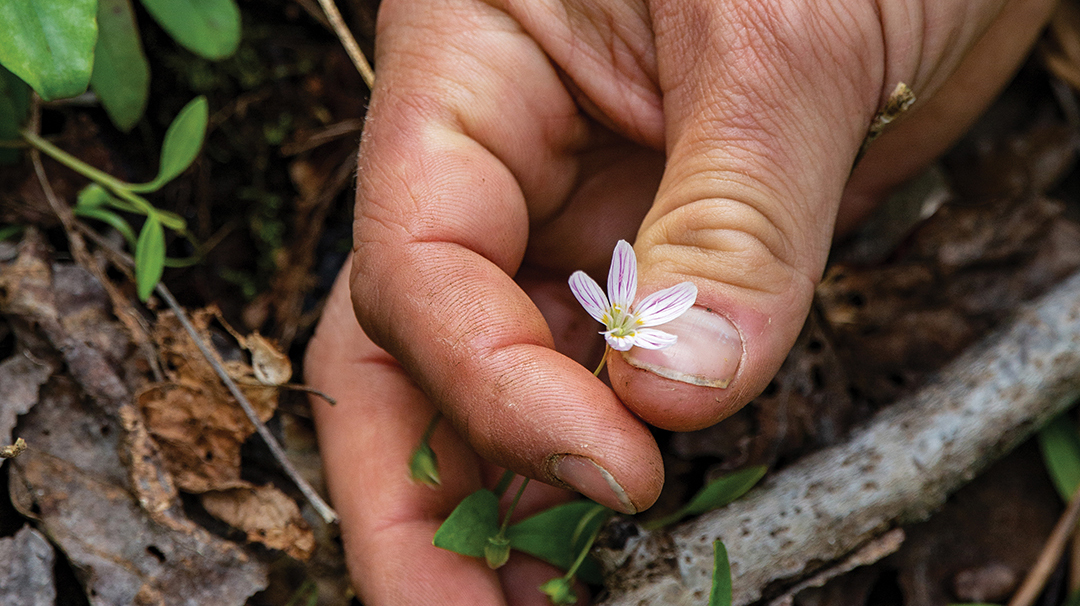
If you’ve been out walking in our woods the past few weeks (and I hope you have!) you’ve probably noticed the color rush that is the annual emergence of the spring ephemerals, welcome harbingers indicating warmer temperatures and longer days aren’t far away.
So what are spring ephemerals? The Miriam-Webster dictionary says that ephemeral “is an adjective defined as lasting a very short time, fleeting, or transitory.” In our context, spring ephemerals broadly describe wildflowers that complete their entire “above ground” annual existence in a matter of a few short weeks.
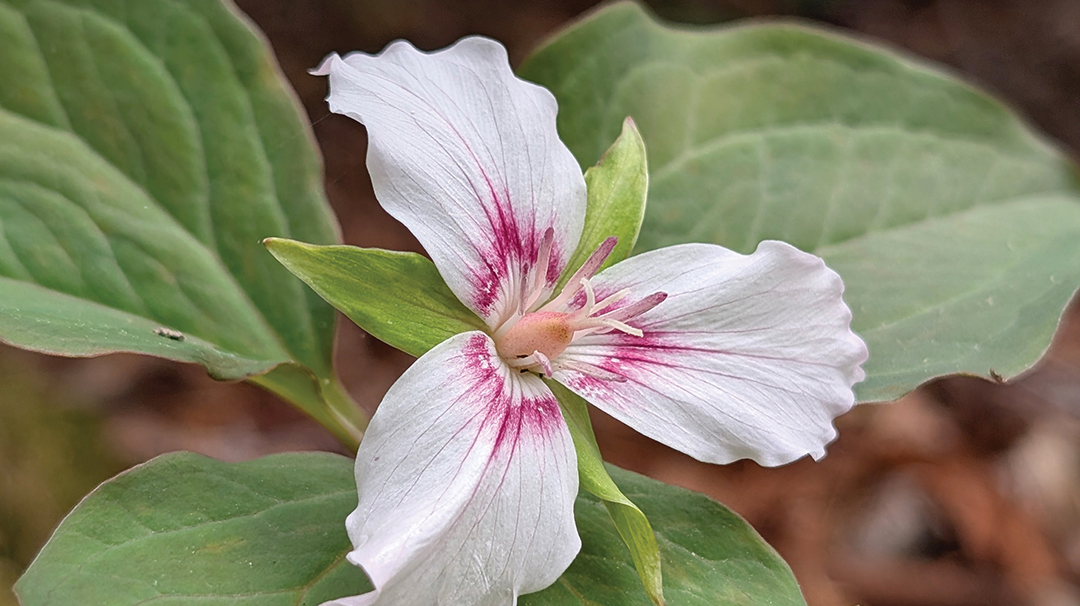
After the winter solstice in December the days began to slowly lengthen, with longer days of sunlight beginning to warm the forest soil, but the overhanging deciduous trees have yet to bud and leaf out into shady canopies. It is within this narrow window of time that spring ephemerals have adapted to flourish.
Spring ephemerals frequently have small, delicate flowers. Examples include the Trout Lily, Virginia Bluebell, Fire Pink, Dutchman’s Breeches, Bloodroot, and Trilliums. And they can be very slow to germinate and grow. Trillium, for example, may take two years to germinate and may not flower for an additional seven to 10 years!
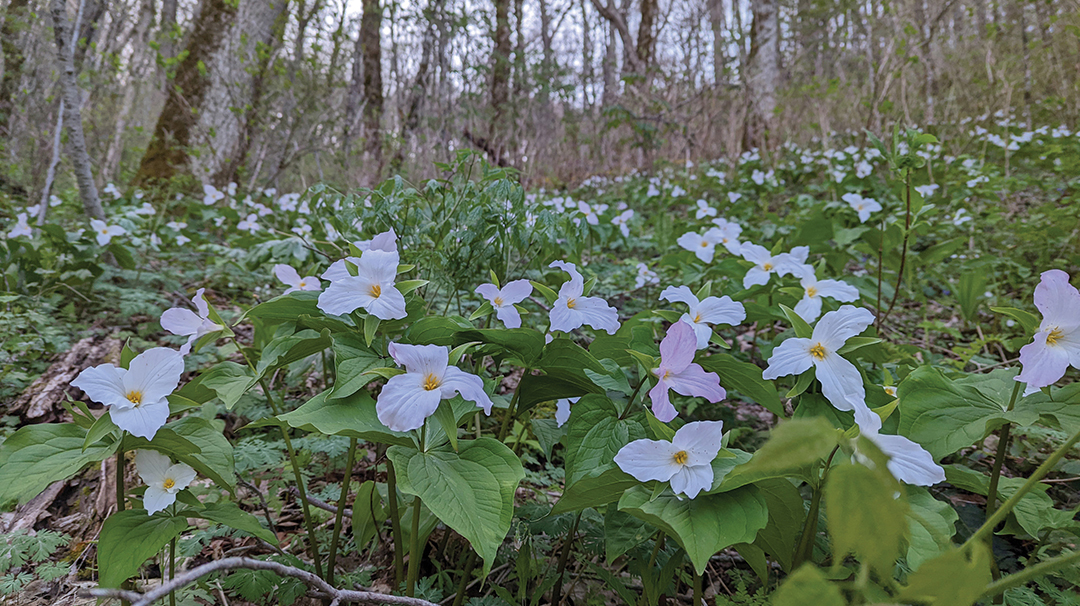
Spring ephemerals have a symbiotic relationship with bees, flies, and other insects, in that these creatures serve as pollinators, the plants in turn providing an early source of nectar and pollen. They also provide early season ground cover, protecting soil from erosion due to water runoff during a time of year when little else is flourishing. Ants also play an important role in the seed dispersal of spring ephemerals, taking the seeds to their nests and eating some of the protective coating, and then depositing the seed elsewhere in the rich, organic duff of the forest floor.
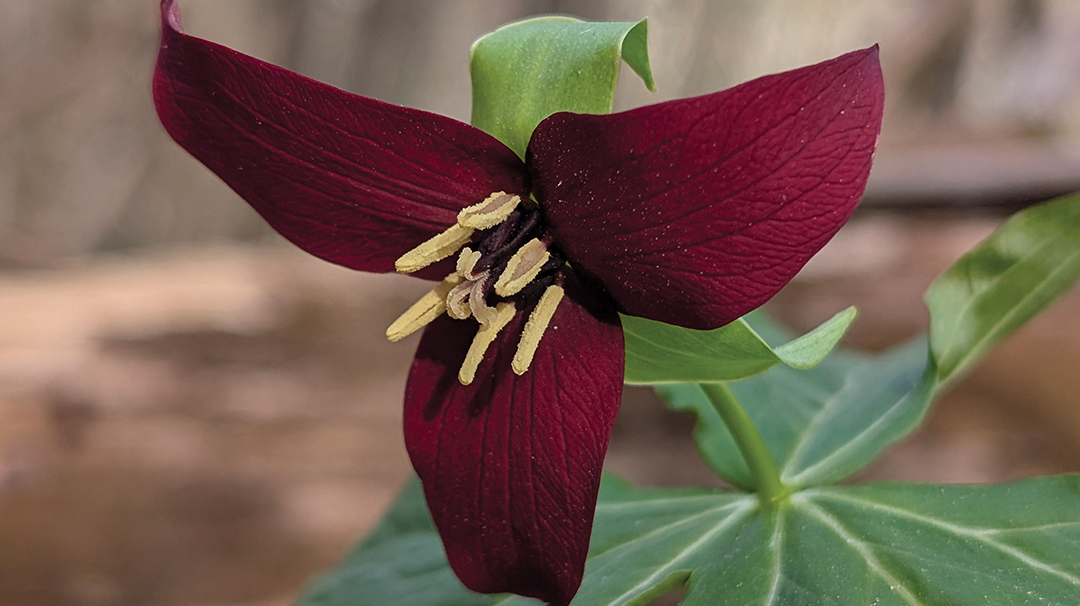
By early summer these elusive plants are retreating back into dormancy, ready to slumber hidden for another year, until the warming suns of spring once again coax them into view.
The mission of the Highlands-Cashiers Land Trust is to protect our unique and irreplaceable biodiversity. For more information, please go to hcltnc.org and be sure to follow HCLT on Facebook and Instagram.


Favorites Count: 0