
By the turn of the start of the 20th century, the town of Highlands was already known for its natural environment, with early town advertisements boasting of healing mountain air.
Throughout the 1900s, people started to take these advertisements more seriously. In a time before antibiotics transformed the treatment of tuberculosis, patients suffering from the disease sought healing in places known for fresh air, sunshine, and healthy climates, such as the town of Highlands.
What really put the town on the map as a treatment destination for TB was the remarkable physician who helped establish the community as a destination for tuberculosis care. Dr. Mary E. Lapham, a pioneering woman doctor, founded the Highlands Tuberculosis Sanatorium, known to locals as “Bug Hill,” and left a lasting mark on the town’s history and its inhabitants.
In the late nineteenth and early twentieth centuries, tuberculosis was one of the leading causes of death in the United States. Doctors had few medical treatments available, so many prescribed rest, nutritious food and extended stays in mountain or desert climates. Western North Carolina became a popular destination for health seekers because of its cool temperatures, clean air, and high elevations. It was Dr. Mary Lapham who recognized the potential of Highlands specifically as a therapeutic setting for tuberculosis patients.
At a time when relatively few women entered the medical profession, Mary Lapham attended nursing school in her home state of Michigan, despite her father forbidding her to pursue a career in medicine. Dr. Lapham first visited the town of Highlands after receiving her nursing degree in 1893. She was drawn to the area’s climate and natural beauty and eventually settled in the town on Satulah Mountain but could not fully rest knowing public health crises were occurring.
Instead, she enrolled in the Women’s Medical College of Philadelphia, graduating with an M.D. in 1900. It was here that she realized her passion for tuberculosis treatment. Determined to learn the latest methods, she traveled to Europe, where physicians were experimenting with new approaches to combating the disease. Here she studied the pneumothorax procedure, a treatment that intentionally collapsed a diseased lung to allow it to rest and heal. Lapham was the first physician in the U.S. to successfully use the artificial pneumothorax treatment for tuberculosis, as well as the first to publish her results.
She believed Highlands offered an ideal environment for treatment and envisioned a facility where patients could benefit from both modern medical care and the restorative effects of the mountain climate.
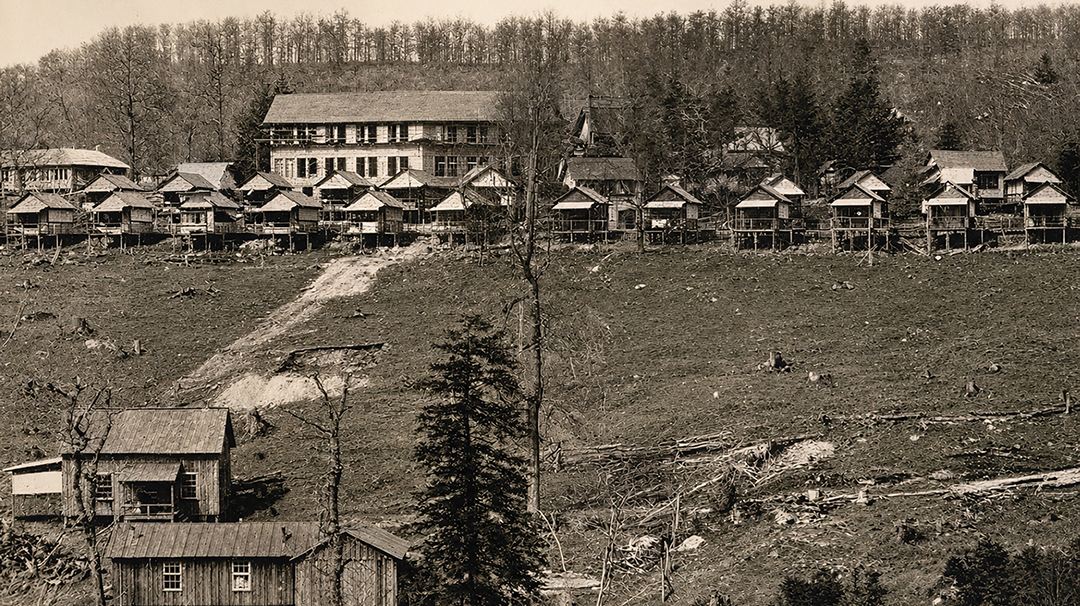
In 1908, Lapham purchased approximately 140 acres on a hill overlooking Highlands (where the Highlands Recreation Center sits today) and established the Highlands Tuberculosis Sanatorium (“Bug Hill”). The sanatorium was unlike the hospitals we think of today. It featured a central administration building surrounded by approximately sixty small open‑air cottages, one of which still stands today at the Highlands Historic Village. These structures allowed patients to remain exposed to fresh mountain air while receiving medical supervision. Patients arrived from throughout the Southeast, many traveling great distances in hopes that treatment at Bug Hill would improve their chances of recovery.
Under Lapham’s leadership, Bug Hill gained a reputation as one of the region’s most progressive tuberculosis treatment centers.
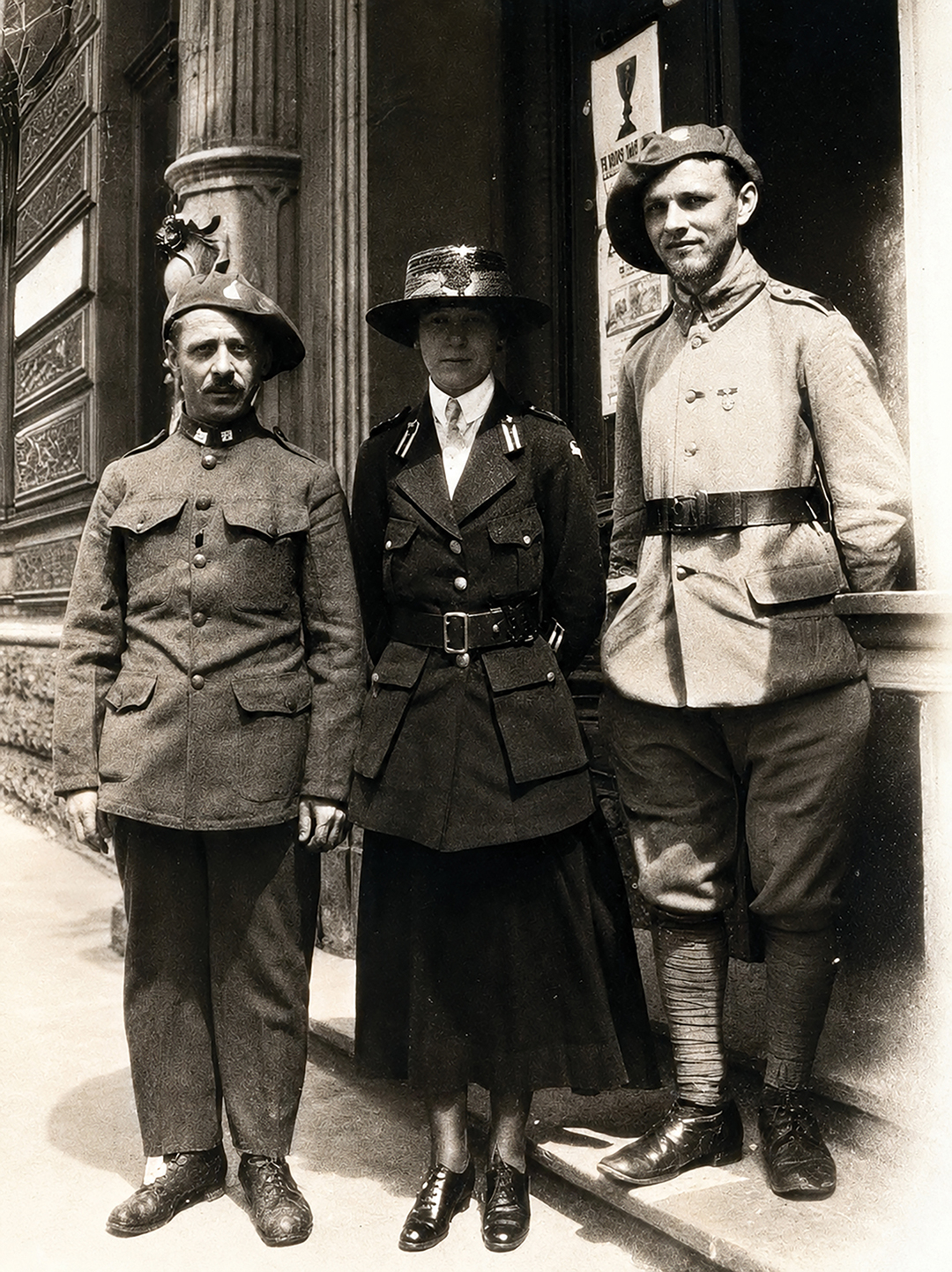
The Highlands Sanatorium operated until 1918, when a devastating fire destroyed the main building. Although all patients were safely evacuated, the facility was never rebuilt. Dr. Lapham went on to volunteer with the Red Cross during World War I and did not reopen the sanatorium.
Dr. Mary Lapham is remembered as a trailblazing physician, entrepreneur, and advocate for public health. At a time when women faced significant barriers in medicine, she built and operated a nationally recognized tuberculosis sanatorium in the mountains of North Carolina, pioneering and popularizing the most effective TB treatment at that time.
Today, visitors who learn the story of Bug Hill gain more than a glimpse into early 20th‑century medicine. They discover the vision and determination of Dr. Mary Lapham, whose belief in the healing power of the Highlands Plateau helped shape an important chapter in the town’s history.
Come check out the surviving Bug Hill tent cottage and our exhibit on Dr. Mary Lapham at the Highlands Historical Society Museum and Historic Village! The Museum and Historic Village are open Thursday–Saturday from 10:00 A.M. – 4:00 P.M. and Sundays from 1:00 P.M. – 4:00 P.M. for this summer. For those unable to visit, we invite you to visit our website at highlandshistory.com to learn more about Highlands history, the Historic Village, and check out our virtual exhibits.


Favorites Count: 0