
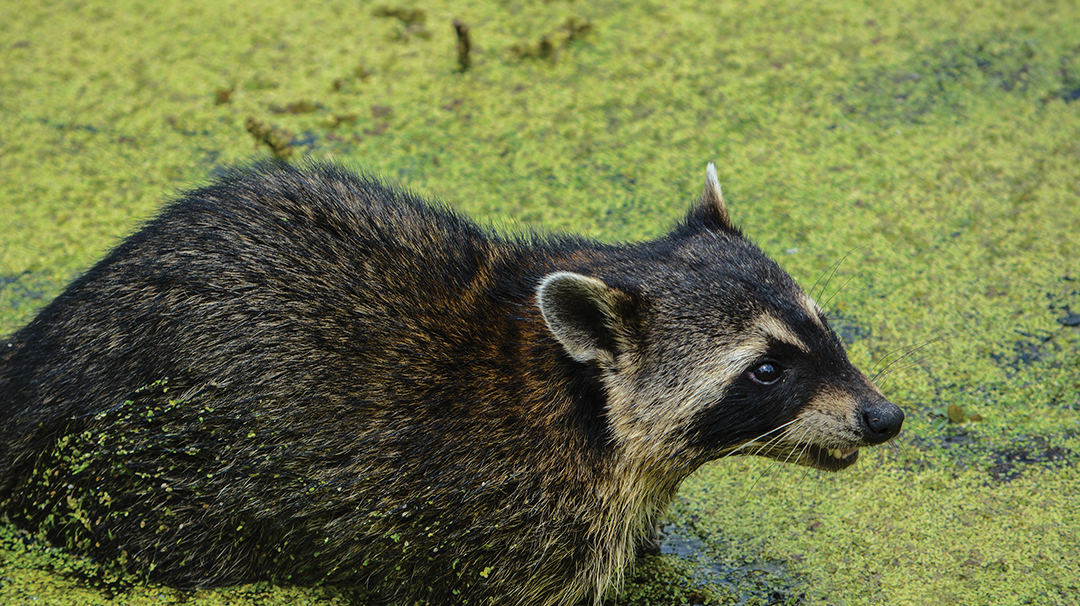
Last month Highlands Police Chief Andrea Holland told the Town Board that there’d been an outbreak of distemper among the Highlands-Cashiers Plateau’s raccoon and fox populations.
That got us here at The Laurel – all of us nature lovers, hikers, campers, and devoted cat and dog owners – wondering what that meant for our pets and for the wild neighbors we encounter on trails and back roads.
To get clarity, we reached out to the NC Wildlife Resources Commission, where Wildlife Health Biologist Miranda Turner has been tracking distemper trends across the state. She confirmed that the virus is not new, nor is it limited to our corner of the mountains.
“Canine distemper virus is present in western North Carolina and across the state in a variety of wildlife species,” Turner explained. “We see it most commonly in raccoons, foxes, and coyotes. Unfortunately, it’s a natural and permanent part of our wildlife populations.”
Turner noted that distemper tends to move through wildlife in cycles.
“We see peaks every few years when a population that hasn’t been exposed before suddenly meets the virus. Once most of those animals develop antibodies, cases drop again – but even in low years, we expect to see a handful of cases.”
Spring often brings an uptick. Young animals without prior exposure are especially vulnerable, and human behavior can unintentionally worsen the spread.
“Anytime wildlife congregates unnaturally – like when people feed them – the virus can move more quickly,” she said. “And unvaccinated domestic dogs interacting with wildlife is another risk factor.”
Symptoms in wildlife can be dramatic and alarming: discharge from the nose or mouth, disorientation, staggering, paralysis, seizures, or nocturnal animals appearing in daylight. Turner emphasized that these signs often lead people to assume rabies.
“Distemper can look very similar, but it’s not transmissible to humans,” she said. “Still, the safest thing you can do is never handle or feed wildlife, especially if they appear sick. Just back away and leave the animal alone.”
For pet owners, Turner’s guidance is straightforward.
“Make sure your dogs are fully vaccinated against canine distemper. Ferrets can be vaccinated too – they’re extremely susceptible. And don’t let pets interact with wildlife or carcasses, especially if something seems off.”
If you spot an animal behaving unusually, Turner encourages reporting it. “People can contact the NCWRC helpline, (866) 318-2401. We often send a biologist to assess the situation and can submit samples for testing.”


Favorites Count: 0