
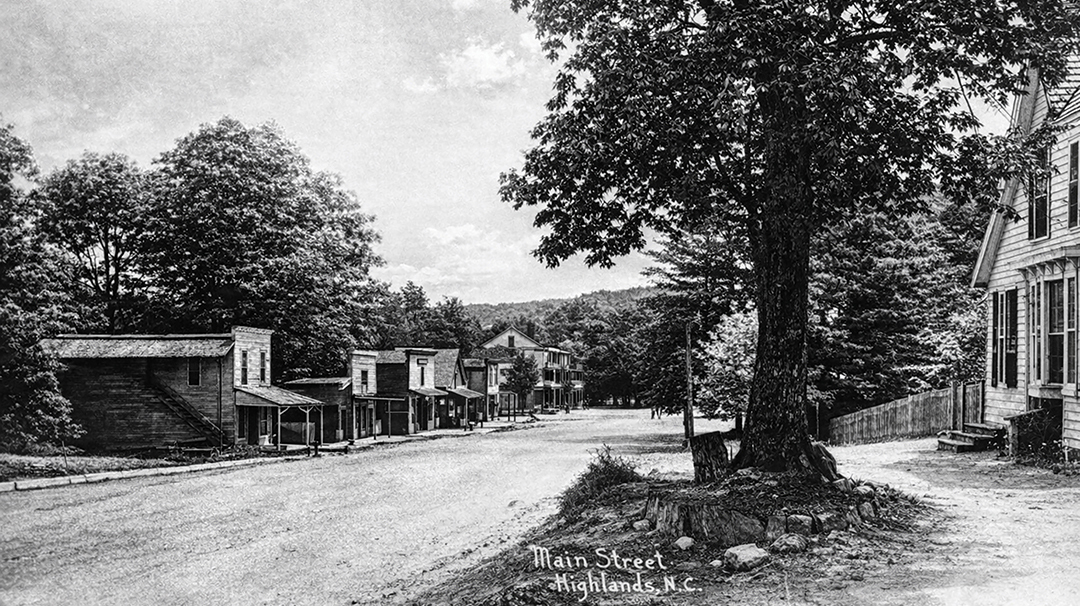
Last month’s article covered the history of hospitality in Highlands but not the residents who enabled the industry’s start and growth.
Highlands’ hospitality would not be what it is today without longtime locals and year‑round residents, who continue to support and shape the town’s business and identity.
The earliest advertisements for Highlands invited people to enjoy the perfect climate, diverse flora and fauna, and mountain air. The town was promoted as an escape from city life, and the opening of early hotels and inns established Highlands as a vacation destination – but operating that infrastructure required a growing year‑round population.
Early Highlands residents were hardy settlers who traversed mountain paths through laurel, streams, and steep embankments. They included tradesmen from the North, Scotch‑Irish laborers and craftsmen from surrounding valleys, and planters and professionals from the South. With this foundation, the hospitality industry began to thrive, stimulating the early economy and encouraging investment in infrastructure and community building.
The first decades focused on seasonal activity, with tourism peaking in summer and dropping in winter. Highlands was known to naturalists for its biodiversity, loved by wealthy visitors for its proximity to major Southern cities, and appreciated nationwide for its beauty and preserved landscape.
For decades, Highlands functioned as a seasonal resort. This changed in the mid‑20th century, when post‑war infrastructure expanded, allowing more visitors from a wider range of places. Growth increased tourism, expanded the year‑round population, and diversified the local economy.
By the late 20th century, Highlands had evolved into a year‑round community. Tourism remains central, but the town now supports full‑time residents whose lives are not defined solely by summer. Early visitors came to escape the heat; modern ones arrive for hiking, waterfalls, festivals, dining, and cultural events. While seasonal peaks persist, restaurants, shops, and services now operate year‑round.
Today, Highlands remains tied to the natural beauty and cultural heritage that first attracted visitors over 150 years ago. Its streets, institutions, and traditions reflect a century of growth and community building. Highlands continues to balance its legacy as a summer retreat with the realities of modern mountain life. According to recent census estimates, the year‑round population is about 1,300.
To learn more about the people who shaped Highlands’ history, visit the Highlands Historical Society Museum. The museum and historic village reopen May 21, with the Season Opening Celebration on Saturday, May 23 at 11:00 A.M. Visit highlandshistory.com for more information.


Favorites Count: 0