
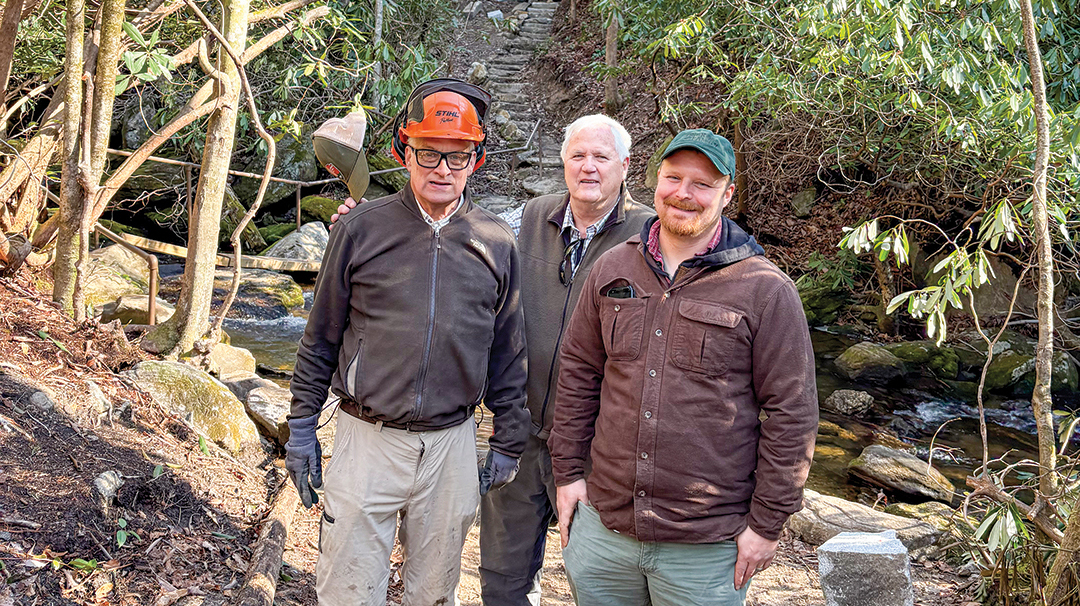
If Jim Chance and the Southern Blue Ridge Hikers nonprofit have anything to do with it, someday the Blue Ridge Connector Regional Trail will link the mountain communities of Clayton, Highlands and Cashiers by foot.
Planned at roughly 45 miles, the route would wind through public lands managed by the U.S. Forest Service. The goal is a trail that can be hiked in sections or completed as a five- to seven-day trek, with lodging options spaced along the way.
Chance says he drew inspiration from Europe’s “inn-to-inn” hiking, sometimes called refuge trekking. The Blue Ridge Connector concept echoes marquee routes such as the Tour du Mont Blanc, which loops through France, Italy and Switzerland.
The vision is a lightweight hiking experience: carry a daypack, walk to the next stop, and rest in a warm bed. Chance imagines small, trail-accessible lodging (not reached by public roads), with private rooms for up to 20 guests and communal dinners and breakfasts.
“What we aim to do is establish lodging in pre-impacted areas,” Chance said. “Between communities [along the trail] we are procuring private locations on the edge of the forest where lodging can be located.”
Kyle Pursel, Southern Blue Ridge Hikers’ field operations manager, believes the model could appeal to people who don’t consider themselves backpackers. “You walk in the woods for a while, and then you stop and have a warm bed, a shower, some food,” he said. “We expect it to be popular.”
A retired hydrographer and longtime outdoorsman, Chance founded Southern Blue Ridge Hikers (SBRH), a 501(c)(3) nonprofit focused on public trail work in the Highlands–Cashiers–Clayton area of Western North Carolina and northeastern Georgia.
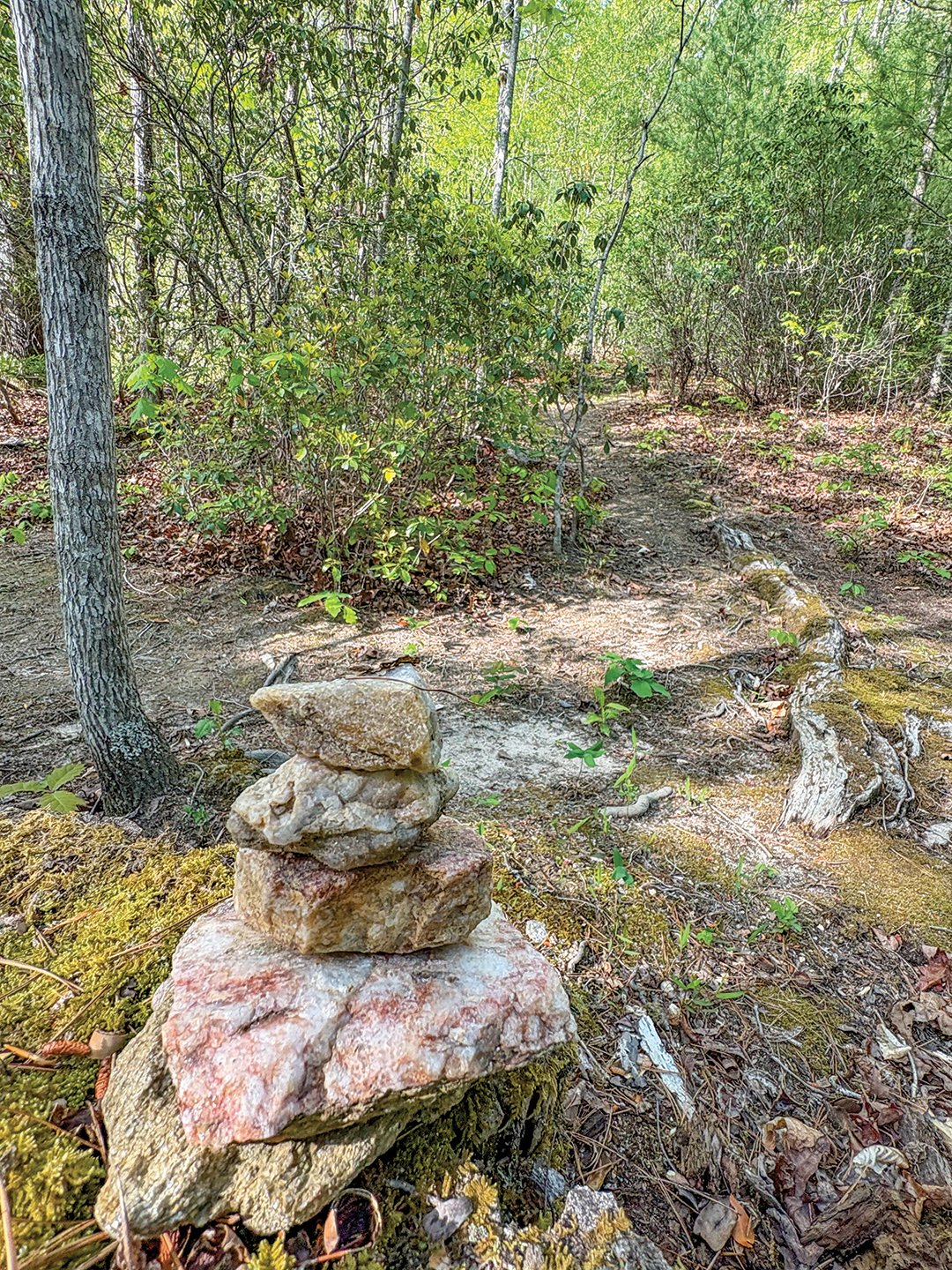
SBRH operates Highlands Trail Trimmers, which maintains public hiking trails in and around Highlands and also supports work near Cashiers and Clayton. The group’s projects include the Chattooga River Trail, Glen Falls Trail, Chinquapin Trail, Slick Rock Trail and Secret Falls Trail, and it frequently partners with other regional trail and conservation organizations.
Nearly 70, Chance still regularly builds, repairs and maintains trails, often in full work gear. At a guest house in Highlands that he uses to host family members and trail crews, a garage is stocked with saws, lumber, picks, shovels and other tools for hauling to trailheads.
“I think it’s important to have our natural areas loved by as many people as possible, because loved areas get preserved,” Chance said. “It’s also important for people to experience these places. Good trails accomplish both.”
Pursel called Chance “a professional volunteer,” saying he works tirelessly on trails and is generous with funding.
Some segments of the Blue Ridge Connector are already established and maintained, but completing the full route will require additional approvals and coordination with the U.S. Forest Service. Chance estimates the total cost at about $2.5 million.
SBRH may begin promoting individual sections as they’re completed and as lodging options come online.
“Jimmy’s dream is big,” said Highlands resident Mike King, who helps SBRH with trail work and funding. “It will take a while to be completely finished. As you can imagine, he would like to live to experience it.”
For more information about how to get outdoors and get involved with Southern Blue Ridge Hikers and Highlands Trail Trimmers – or to learn ways to financially support the Blue Ridge Connector project – visit southernblueridgehikers.org.


Favorites Count: 0