
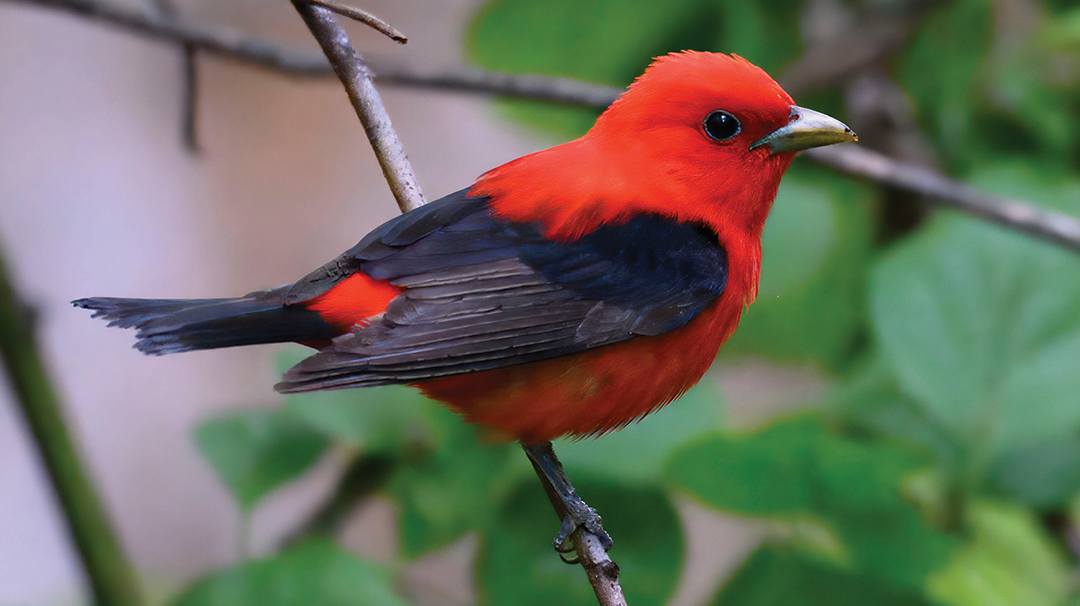
Scarlet Tanager
In the early morning, before the sun has fully risen, a blur of scarlet flits through the upper reaches of the canopy.
Its bright red plumage and striking black wings and tail feathers are the telltale markers of the Scarlet Tanager. They spend much of their time high in the canopy, and during the half of the year these birds are in North America, the Highlands-Cashiers Plateau sits at the southern tip of the Scarlet Tanager’s breeding range.
Males arrive in early spring to claim territory and compete for the best nesting and feeding spots. They engage in singing battles that can escalate into displays, puffing up their feathers to intimidate each other. If that fails, a Scarlet Tanager may resort to chasing his rival off.
Females, whose coloration ranges from olive to yellow with similar dark wings and a dark tail, arrive several weeks later. Once they have found a partner, the female spends three to four days building a simple nest of loose twigs, grasses, and bark. She molds it to her body and tucks in loose ends. Their nests are often hard to spot, since they are typically built about fifty feet off the ground.
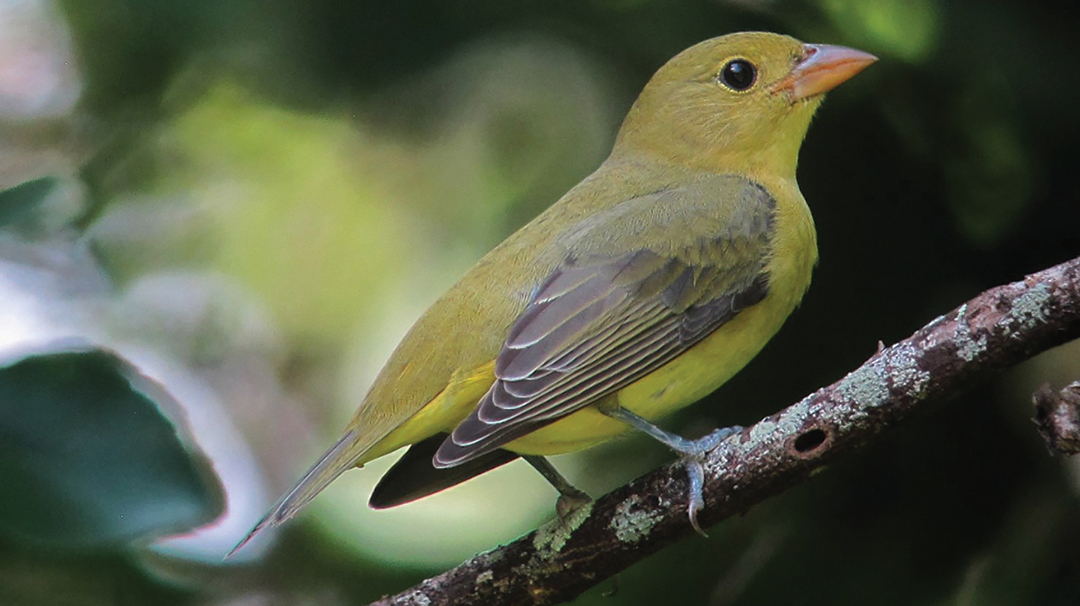
Scarlet Tanager
Once the eggs are laid, both parents care for the nest until the chicks fledge. It takes about two weeks from the time they hatch for the featherless, blind chicks to grow their flight feathers and leave the nest.
During this time, Scarlet Tanagers must also be on the lookout for brood parasites. They can fall victim to the Brown-headed Cowbird, which may push their eggs out before laying its own in their place.
The unsuspecting Scarlet Tanager may return and be unable to tell the difference between its smaller eggs and the cowbird’s larger egg. Even after it hatches, the Scarlet Tanager will feed the chick as if it were its own.
Despite being a species of least concern, human activities still put pressure on these songbirds. They are sensitive to habitat fragmentation and prefer large, undisturbed tracts of forest. Because they spend so much time high in the canopy, they can be difficult to spot while catching insects or feasting on berries. It’s often easier to listen for their raspy, robin-like call.
If you’re interested in learning more about native birds and how to spot them, join events hosted by the Headwaters Bird Alliance at headwatersbirdalliance.org.


Favorites Count: 0