
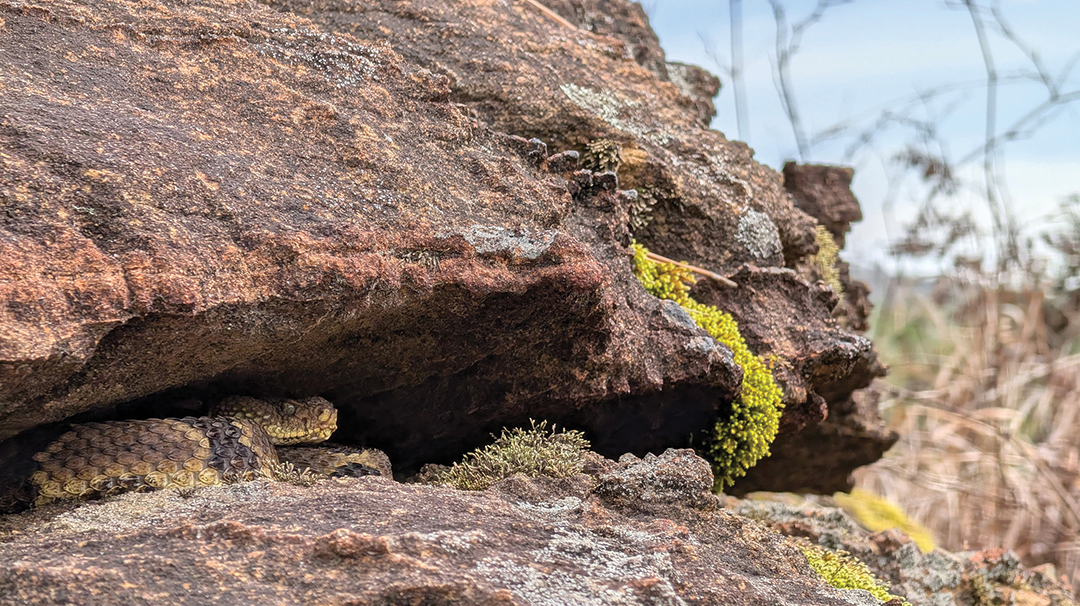
It’s the time of year when hikers and other nature enthusiasts may encounter one of our area’s most misunderstood animals, the Timber Rattlesnake. Also known as Canebrake Rattlesnakes, these ectothermic (cold‑blooded) animals actively seek out warm, sunny rocky outcrops throughout our area, particularly those with a south or southwest exposure and little tree cover. These fascinating creatures play vital ecological roles, including controlling rodent populations.
Timber Rattlesnakes are thick‑bodied and can reach lengths of up to six and a half feet, although about four feet is more common. They usually have a black tail and are characterized by dark crossbands on a lighter background, typically yellow, dark gray, or sometimes almost black. Timber Rattlesnakes seek dens, often in rocky habitat near feeding and warming locations, and are frequently communal hibernators as they seek to share warmth.
Timber Rattlesnakes mate in the late summer or fall, and with a gestation period of almost a year, females will give birth to five to twenty young the following summer. In our area, females will not usually reproduce until they’re nine or ten years old, and then, due to the burden it places on their bodies, only again every three or four years. This slow reproduction cycle is only one reason for the decline of the species; loss of habitat, as well as misconceptions about their importance to the ecosystem, have played a role as well. North Carolina has listed the Timber Rattlesnake as a species of Special Concern.
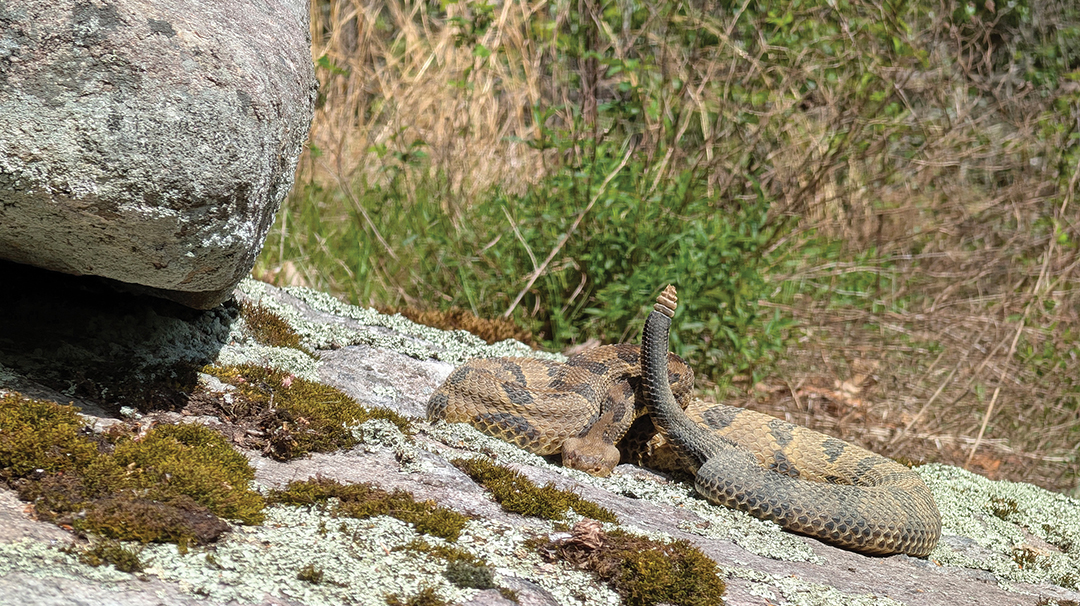
Timber Rattlesnakes have long played a role in our area’s culture; the Cherokee, for example, called the rattlesnake u‑tsa‑na‑ti, or “he has a bell,” a reference to its noisy rattle, and attached rattles to bottle gourd medicine rattles used in spiritual healing practices.
Timber Rattlesnakes, while possessing highly toxic venom, are generally not aggressive and only strike when provoked or stepped on. They have developed color patterns that provide excellent camouflage within our timber habitat, and rattle when threatened. If encountered on the trail, simply observe their unique beauty from a safe distance – and leave them to continue their important functions in our ecosystem.
The Highlands‑Cashiers Land Trust has been protecting our unique places – and the animals and plants that call them home – since our first property in 1909. Follow HCLT on Instagram and Facebook for current information on our fun, educational, and free outings.


Favorites Count: 0