
It’s the Outpost Inn, the output of historic preservationist Jason Reeves, the tangible manifestation of his most outlandish design fantasies – where a hippie commune shacks up with an Appalachian lodge and leaves its toothbrush on the sink.
Part ‘60s motor court, part Woodstock revival, it’s a place where the analogies pile up as quickly as the vintage quilts: Burning Man meets summer camp for the beatnik era; Topanga Canyon and the Catskills have a baby and raise it on the edge of the Blue Ridge.
You get the picture – but only sort of, because the Outpost isn’t trying to be pinned down.
Reeves doesn’t just renovate buildings, he resurrects their soul.
The Outpost Inn, recently named one of Esquire Magazine’s Best New Hotels in America, is the second of his Highlands ventures.
After transforming the Main Street Inn into the Highlander Mountain House, Reeves couldn’t stop thinking about a curious cluster of early 20th-century buildings just down the road. They’d been a retail center, a doctor’s office, later a hotel called The Wells. Now they stood awkwardly polished, waiting to be rescued from their own renovation.
“I kept driving past it,” Reeves says, “and it reminded me of Deetjen’s Inn in Big Sur. There was something about the bones of the place, the way the buildings sat on the land, that got under my skin. I couldn’t let it go.”
Haunted, inspired, and a little obsessed, Reeves finally leapt when the property came back on the market. His vision? A hippie-modernist retreat for creatives, seekers, and anyone who’s ever felt more at home barefoot and by a fire.
The Outpost, then, is no ordinary hotel. You don’t check in so much as drop into a world that feels both transported and timeless. The 14 guest rooms – all pet-friendly, with private exterior entries – wrap around inviting courtyards with open-air fireplaces, plenty of covered porches, and the occasional stash of complimentary s’mores supplies. When rain moves in (and in Highlands, it often does), guests don’t retreat – they just reconfigure.
Inside, the lobby riffs on the old mercantile with rough-sawn floors, shiplap walls, and a fireplace worthy of a group guitar jam. Reeves wanted it to feel like a summer camp gathering spot – where you come back from your cabin to commune, tell stories, drink something warm or strong, and reconnect.
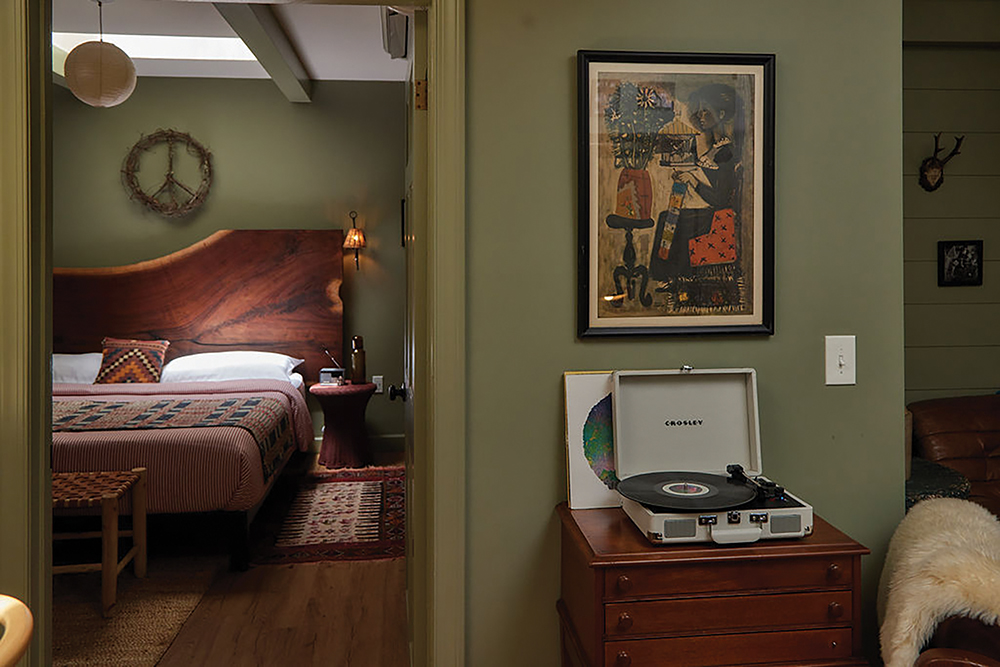
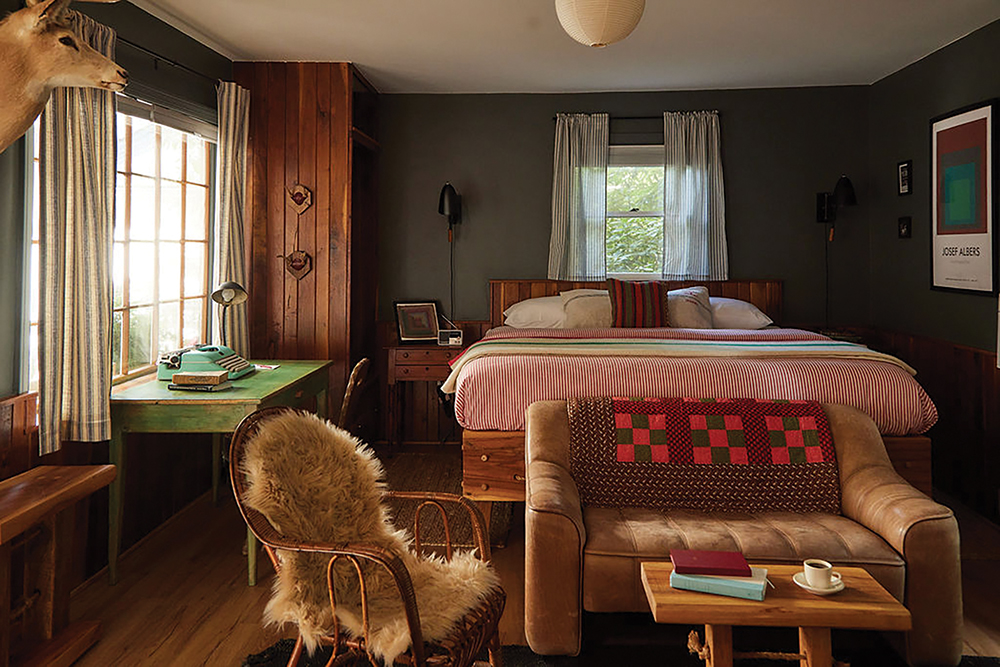
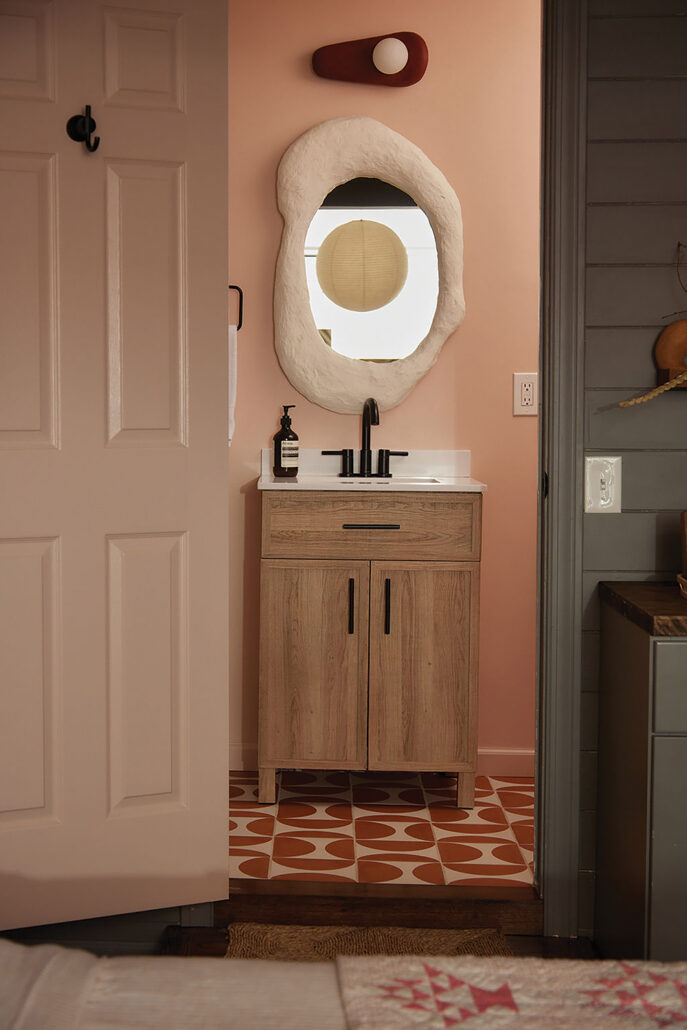
The rooms are just as layered and personal. There’s no hotel-grade monotony. Instead, each space is a composition—somewhere between a vintage fever dream and a designer’s thesis. There are Noguchi lamps and Appalachian rockers, Pendleton blankets, antique pottery, and handmade walnut headboards. Reeves sourced nearly everything himself, dragging back pieces from Round Top, flea markets, and backroad antique barns.
“It’s meant to feel like the mountain cabin of my eccentric uncle from the 1970s,” Reeves says. “Each object stirs a memory. Nothing’s perfect, and that’s the point.”
The result is a kind of immersive nostalgia that’s difficult to describe and even harder to leave.
And that’s exactly what Reeves is after: a place where guests don’t just sleep, but stay. Stay to read the Foxfire books stacked on the shelves, thumb through a dog-eared copy of Ron Rash or Charles Frazier or sketch out a new song lyric at one of the lobby tables.
“I wanted it to be a haven for people who make things – music, writing, art. A creative camp with good bath products.”
And now open to the public, the inn’s coffee and wine bar is a soulful extension of that spirit. Espresso and banana bread by morning; natural wines and small plates by evening. The menu is simple and thoughtful: smoked trout dip, Appalachian charcuterie, housemade chips dusted in za’atar. Designed to spark conversation or let you sink deeper into your book, the offerings echo the inn’s central vibe – unhurried, communal, and quietly compelling.
But what makes the Outpost most remarkable is that it never slips into pastiche. It’s not a theme. It’s a feeling – an atmosphere conjured through design, intention, and the quiet energy of someone who believes deeply in place. Reeves, who also co-owns The Greystone Inn and is repositioning it with Wild Air Ventures, may have degrees in historic preservation and real estate design, but his real talent is mood. He knows how to animate space—how to make it feel lived in, longed for, and strangely familiar.
And that might be the secret of the Outpost’s appeal. You arrive expecting a hotel. You leave wondering how a place you just met already feels like home. Located just a six-minute walk from Main Street, it’s close enough to town but feels miles removed.
“I think what we’re doing here is helping people unplug,” Reeves told me. “Reconnect with what matters. Inspiration through the arts. Slowing down. Listening again.”
You don’t need to be an artist to stay here. But it might make you one.


Favorites Count: 0