
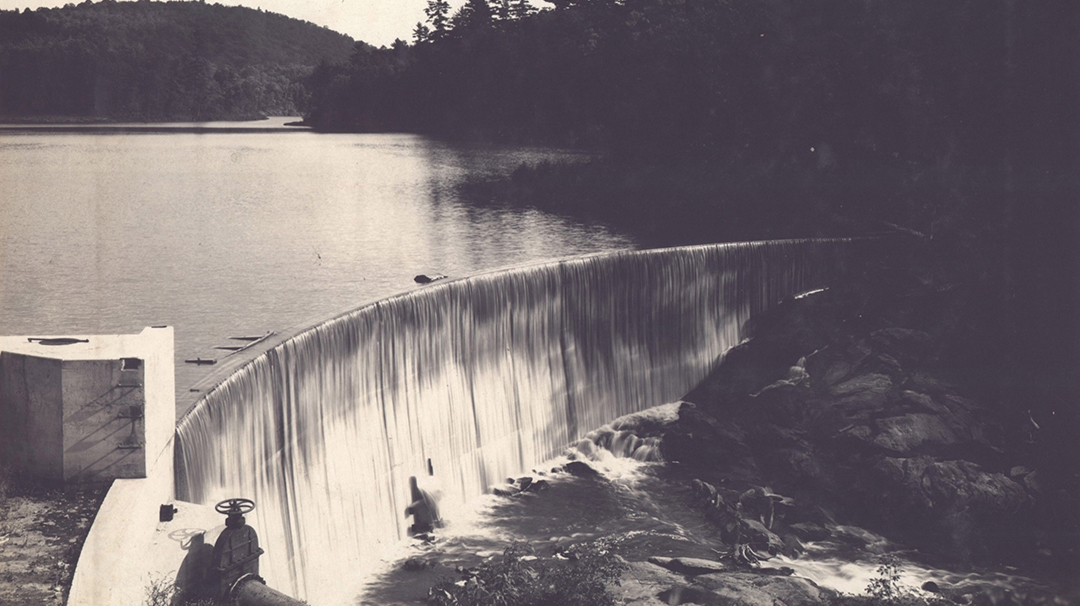
Just west of downtown Highlands, Lake Sequoyah is one of the community’s most recognizable landmarks. Surrounded by mountain forests and scenic homes, it is easy to assume the lake has always been part of the landscape.
In reality, Lake Sequoyah is a man-made reservoir created during the late 1920s, a period of rapid growth and modernization in Highlands. Formed by damming the Cullasaja River, the project was designed to provide hydroelectric power and a dependable municipal water supply as Highlands evolved from a small mountain village into a thriving resort community.
Nearly a century later, Lake Sequoyah remains an important part of the town’s history, economy, and natural landscape.
During the early 1900s, Highlands became increasingly popular as a summer destination. Improved highways made travel easier, while new homes, hotels, and businesses accommodated a growing number of visitors.
Town leaders recognized that continued growth would require significant investments in infrastructure. Rather than relying on scattered water sources, they envisioned a reservoir that could provide both drinking water and hydroelectric power. The project reflected the forward-looking spirit of the era, when many mountain communities invested in public works to encourage economic development.
The Cullasaja River was selected as the source, and in 1927 the river was dammed to create Lake Sequoyah. The reservoir provided Highlands with its first reliable source of locally generated electricity while strengthening the town’s water system.
Constructing the reservoir was a major undertaking for a small mountain community. Engineers selected a narrow section of the river where a dam could efficiently hold back water. Before the lake could be filled, workers cleared trees and vegetation from the valley that would soon lie beneath the rising water.
The project altered both aquatic and terrestrial ecosystems. Flooding changed water temperatures, fragmented habitats, and permanently transformed the natural landscape. Local laborers, contractors, and craftsmen worked under demanding conditions, navigating steep slopes, rough roads, and unpredictable weather to complete the project.
Their efforts paid off. The hydroelectric plant supplied power not only to the town but also to important local institutions. The newly established Highlands Country Club, which opened along the lakeshore in 1928, received electric service from the new system.
Residents soon discovered that the lake offered more than water and electricity. Boating, canoeing, fishing, and picnicking quickly became popular activities, and Lake Sequoyah emerged as a favorite recreational destination.
The reservoir also helped establish the western side of town as a desirable residential area. Homes built along the shoreline took advantage of the scenic views, and over time the lake became just as valuable for recreation and tourism as it was for utilities.
Because Lake Sequoyah remains an important drinking water source, protecting its watershed has become a priority. Careful management of development, stormwater runoff, and water quality helps preserve both the lake’s ecological health and its value to the community.
Since 1993, the Town of Highlands has included stringent sediment-control requirements in its Water Supply Watershed Protection ordinances. These measures help prevent excessive runoff and keep pollutants from entering the reservoir.
Nearly 100 years after its creation, Lake Sequoyah continues to define Highlands. It supplied the power that helped modernize the town, encouraged residential and recreational development, and remains a dependable source of water for the community.
Although visitors often admire the lake for its beauty, its deeper significance lies in the vision of the civic leaders and workers who created it. Their investment transformed Highlands into a more modern mountain town while leaving behind one of its most enduring landmarks.
Come visit the Highlands Historical Society Museum and Historic Village before the season concludes. The Museum and Historic Village are open Thursday through Saturday from 10:00 A.M. to 4:00 P.M. and Sundays from 1:00 P.M. to 4:00 P.M. For those unable to visit, learn more about Highlands history at highlandshistory.com.


Favorites Count: 0