
Tim Piccolo is particular about flour.
The pizza dough he’s rolling out at Grand Olde Station this summer starts with 00 flour, the finely milled Italian flour prized for its elasticity, then adds soy and rice flour to the blend – the Roman formula that produces a Pinsa crust: chewy at the center, crackling at the edge, lighter than anything a conventional oven can achieve. Piccolo had a dedicated Pinsa oven brought in for it. You won’t find another like it in the area.
That combination – something genuinely uncommon, delivered without ceremony, in a building already dense with history – is essentially the Grand Olde Station formula.
For those who haven’t made the turn off Highway 281 North, a brief orientation: the 1902 railroad depot that once received the Vanderbilts and the Fords, then became McNeely’s General Store, then the Brown Trout, then sat idle through the pandemic years, reopened in June 2021 under the ownership of John Nichols, whose grandfather helped rebuild Lake Toxaway after the dam failure of 1916. Salvaged doors from the long-demolished Toxaway Inn now serve as tabletops. A full-size black bear presides over the dining room. Outside, a 1909 Chris-Craft launch, a restored 1941 fire truck, and a railroad caboose sit within view.
The effect is less museum than time collapse – past and present occupying the same square footage without friction.
Piccolo arrived as Director of Operations in early 2025, drawn by Nichols’ vision after two decades running Italian steakhouses in Georgia. His approach has been measured – layering in new elements without disturbing what already works.
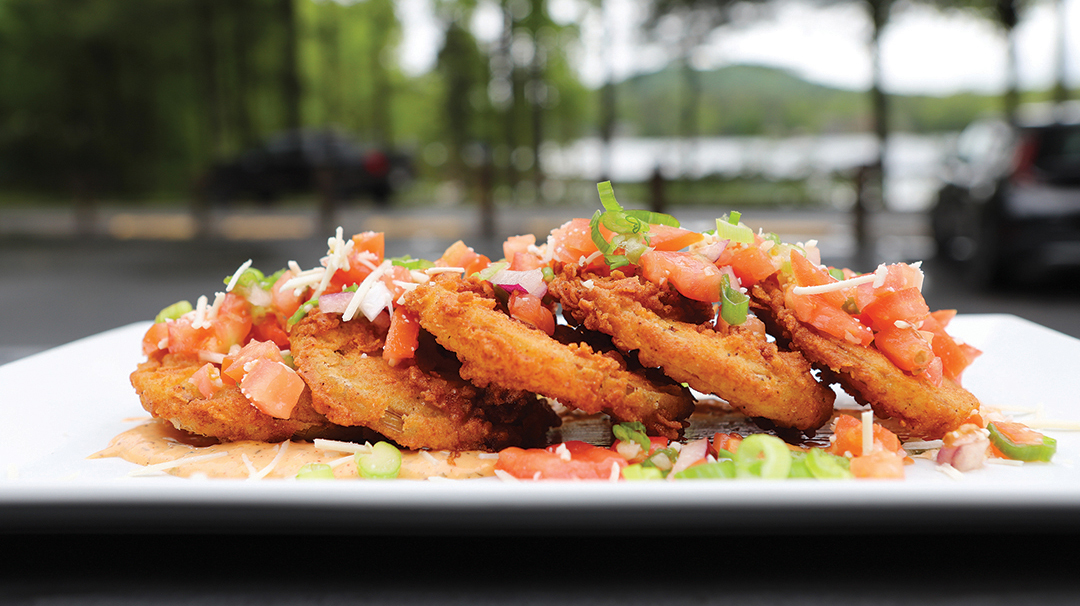
The rib-eye now comes with the option of steak Diane, au poivre, or marsala. Bruschetta and fried green tomatoes anchor the appetizer list. The Pinsa pizzas arrive this summer in a range that runs from meat lovers to buffalo chicken, a Philly-style build, and a vegetable-forward option. It’s a menu that can stretch without announcing the shift.
That flexibility shows up most clearly in the room itself. There are tables that order the same thing every week – crab cakes, wedge salads, burgers – and don’t intend to change.
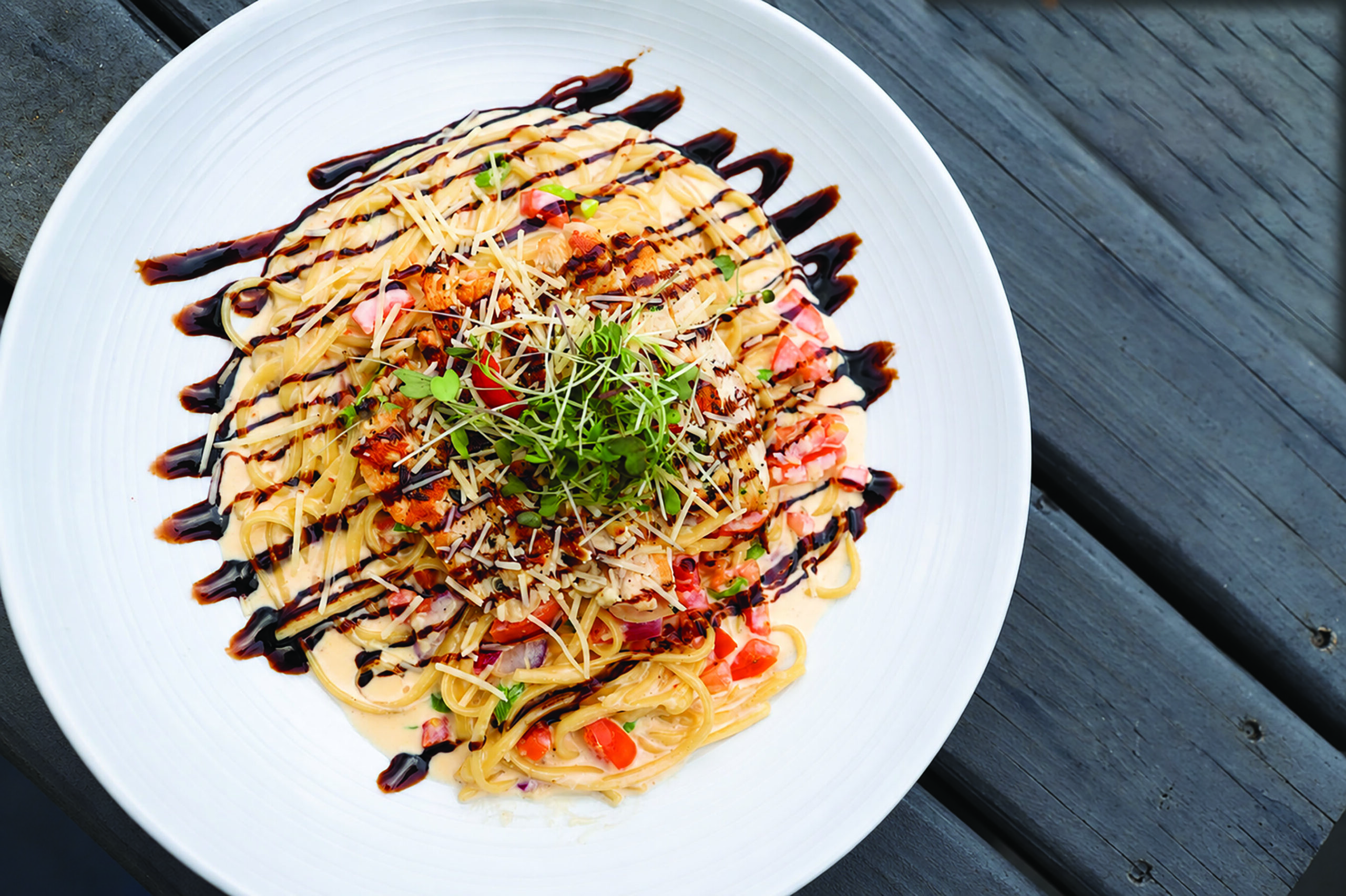
At the bar, a handful of regulars move through dinner the way you might at home, without much ceremony, the staff already anticipating the next round.
A few seats down, someone is working through the newer additions, treating the menu like something to be explored. The kitchen moves between those rhythms without favoring one over the other.
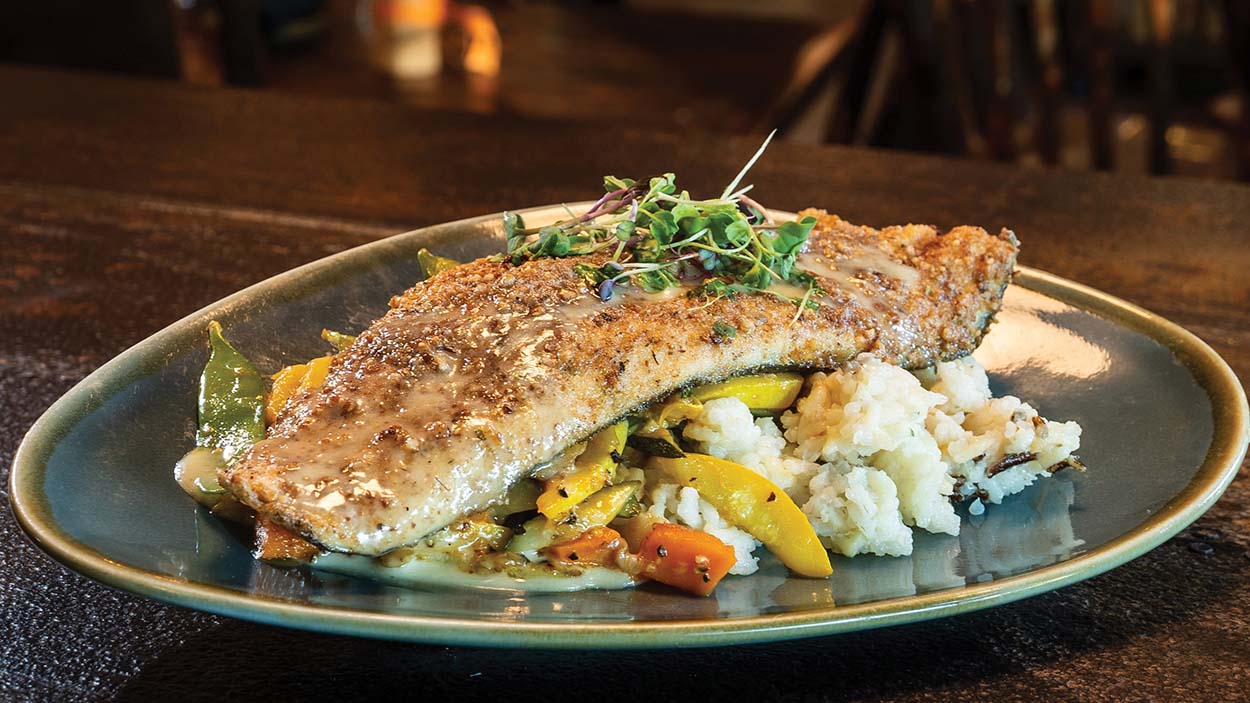
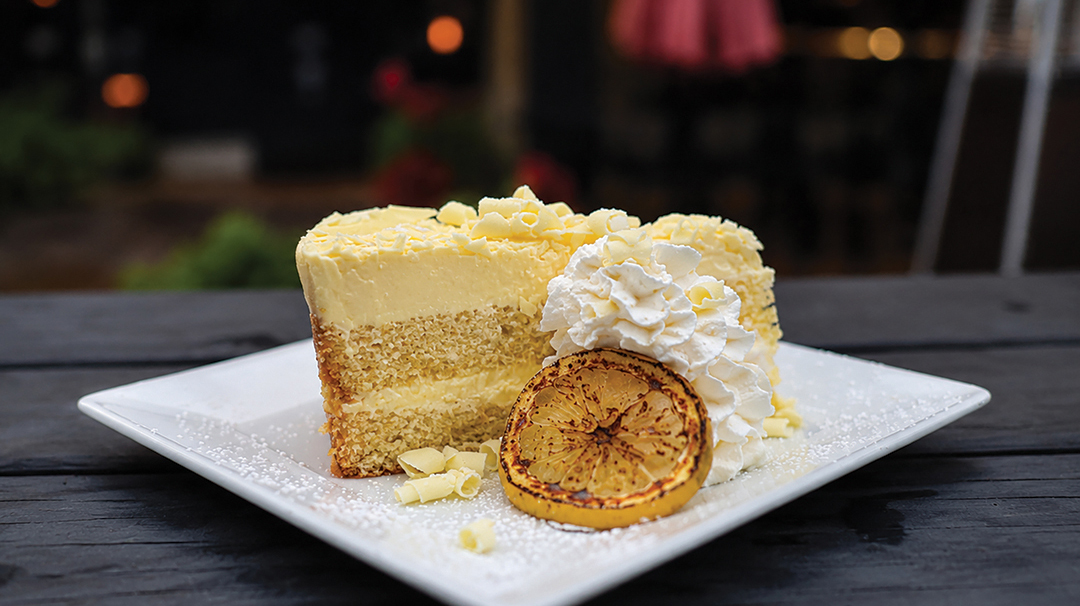
Locally sourced trout is still pan-seared, served with a Chardonnay beurre blanc. Steaks are finished in butter. The apple bourbon bread pudding arrives warm, with ice cream. Nothing about the food feels like it’s trying to redirect the place; it’s simply widening the range of what it can hold.
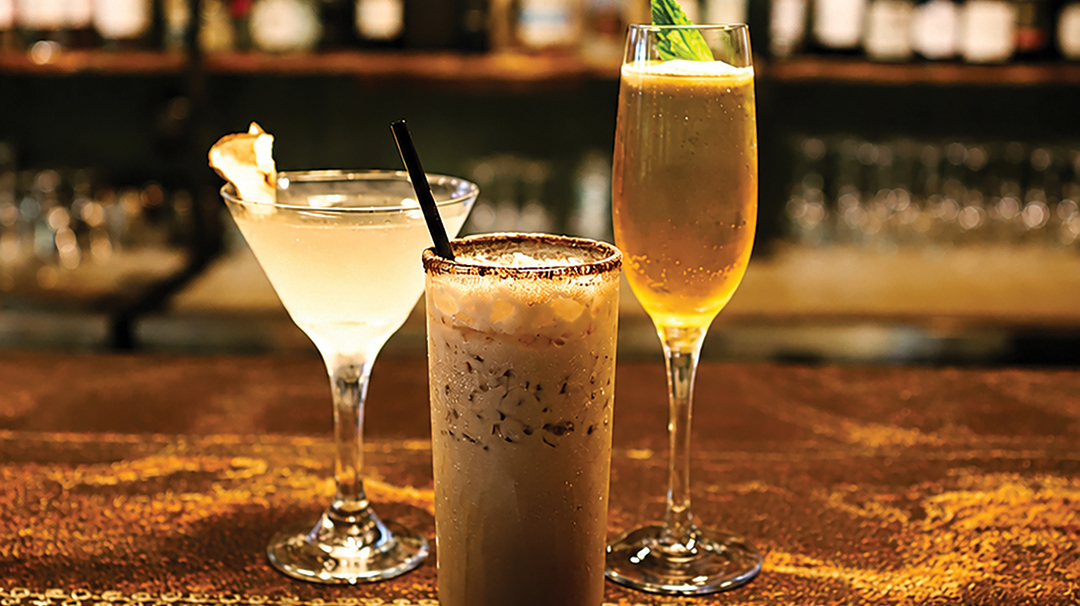
Beyond the dining room, that range extends outward. The property continues to host weddings, rehearsal dinners, and larger gatherings; a food truck and barbecue setup keep the operation active beyond the building itself. Piccolo has also been working with Nichols on a Brevard property – an old bank building – as a potential event space, another incremental expansion rather than a pivot.
Grand Olde Station doesn’t rely on reinvention. It accumulates. A new dish, a different oven, another project just down the road – each addition small on its own, but together they give the place a sense of forward motion without disrupting what made it work in the first place.
In a building that has already lived several lives, that kind of steady evolution feels less like change and more like continuation.


Favorites Count: 0