
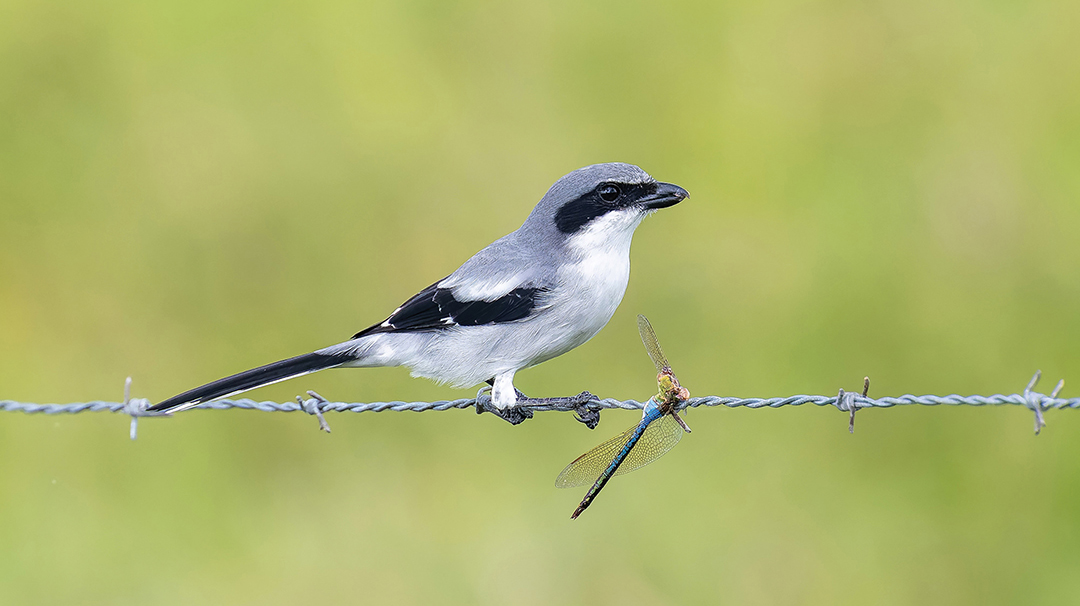
If you notice a string of barbed wire with dead mice strung along it, or a bush with grasshoppers skewered on the thorns, it isn’t someone’s idea of low-budget Halloween decorations.
Nicknamed the “butcher bird,” the loggerhead shrike stashes prey using this unique method of creating “pantries” where it stores food for winter or times when food is scarce.
This small, robin-sized songbird will perch on fence posts as it scans open fields and meadows for prey. Once prey is spotted, the shrike takes off and can hover above the ground, similar to a hummingbird, as it watches for any flit of movement. A loggerhead shrike will use its pointed, raptor-like beak to kill its prey.
Capable of carrying animals equal in size to itself, it will sometimes use thorns as a butcher would use a hook, to hold prey in place as it tears off bite-sized pieces.
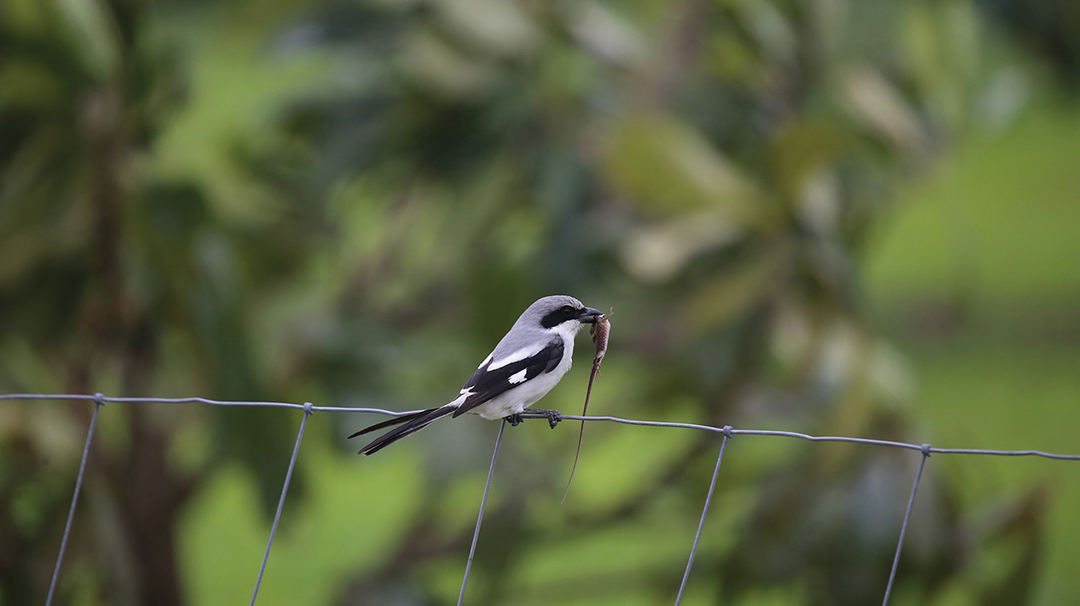
Insects are their primary source of food in the summer. Shrikes have been known to hunt on cold mornings when lower temperatures immobilize their cold-blooded prey. In the winter, vertebrates make up a larger portion of their diet. Snakes, frogs, mice, lizards, and even small turtles are all fair game.
Learning how to hunt starts early for these little songbirds. Once their chicks fledge, they can be observed playing at the hunting that their parents do as they hone their own skills. They maneuver through trees, chasing imaginary prey. They even practice making their own pantries by touching leaves against branches and twigs.
Loggerhead shrikes are a common species throughout the southern United States, but they are one of many bird species whose population has been in steep decline. It is estimated that this is in large part due to the ingestion of pesticide-laced prey. They prefer open habitat and will often nest and live in orchards, golf courses, pastures, and agricultural fields where the use of pesticides is most common. Males and females will search for and select the nesting site together, where they build nests in thorny vegetation as a defense against predators.
Due to the shrike’s ability to have as many as 12 chicks a year, it is thought that populations can rebound if suitable habitat remains available and pesticide use is curtailed. This would ensure that the loggerhead shrike will continue to haunt its prey for many years to come. (Editor’s Note: And haunt my nightmares!)


Favorites Count: 0