

You’ll notice that this issue of The Laurel is light on features in our Recreation & Creation section. That’s because so many of us, not simply our black bears, have gone into hibernation.
But there’s one feature, nearly unparalleled in the Southeast, you’ll find here that’s ignored by way too many people. And you don’t have to wander deep into the brush or clamber up a rocky escarpment to enjoy this natural wonder.
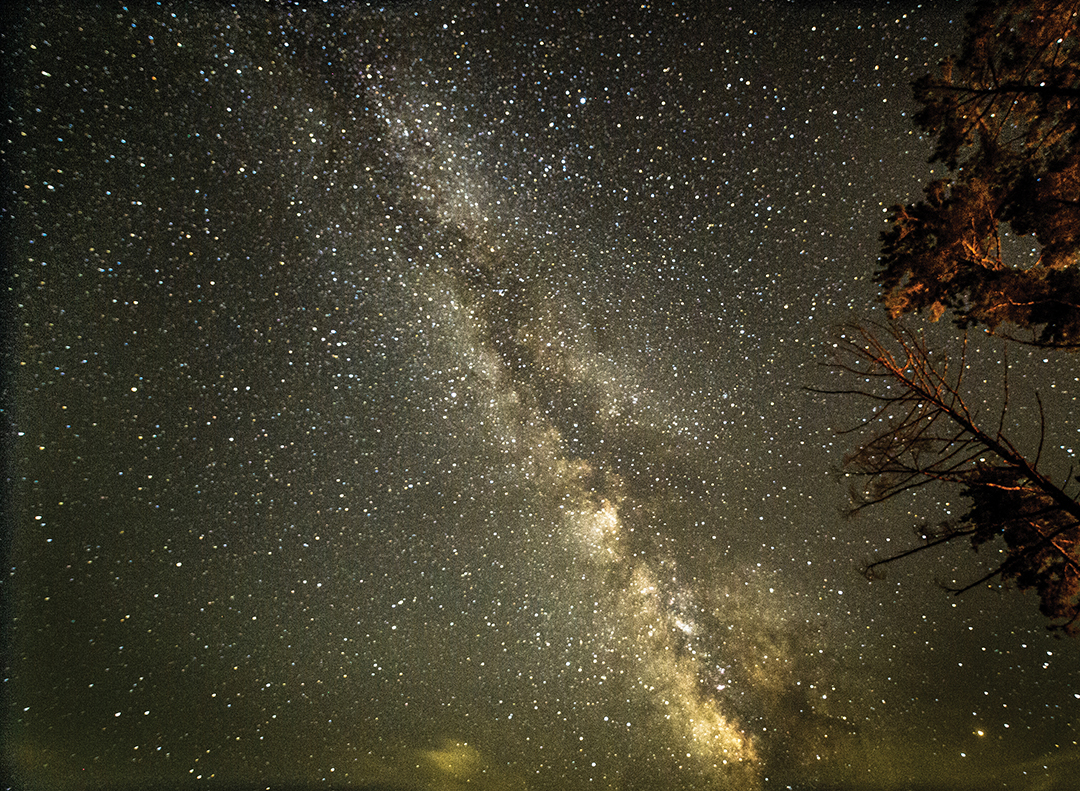
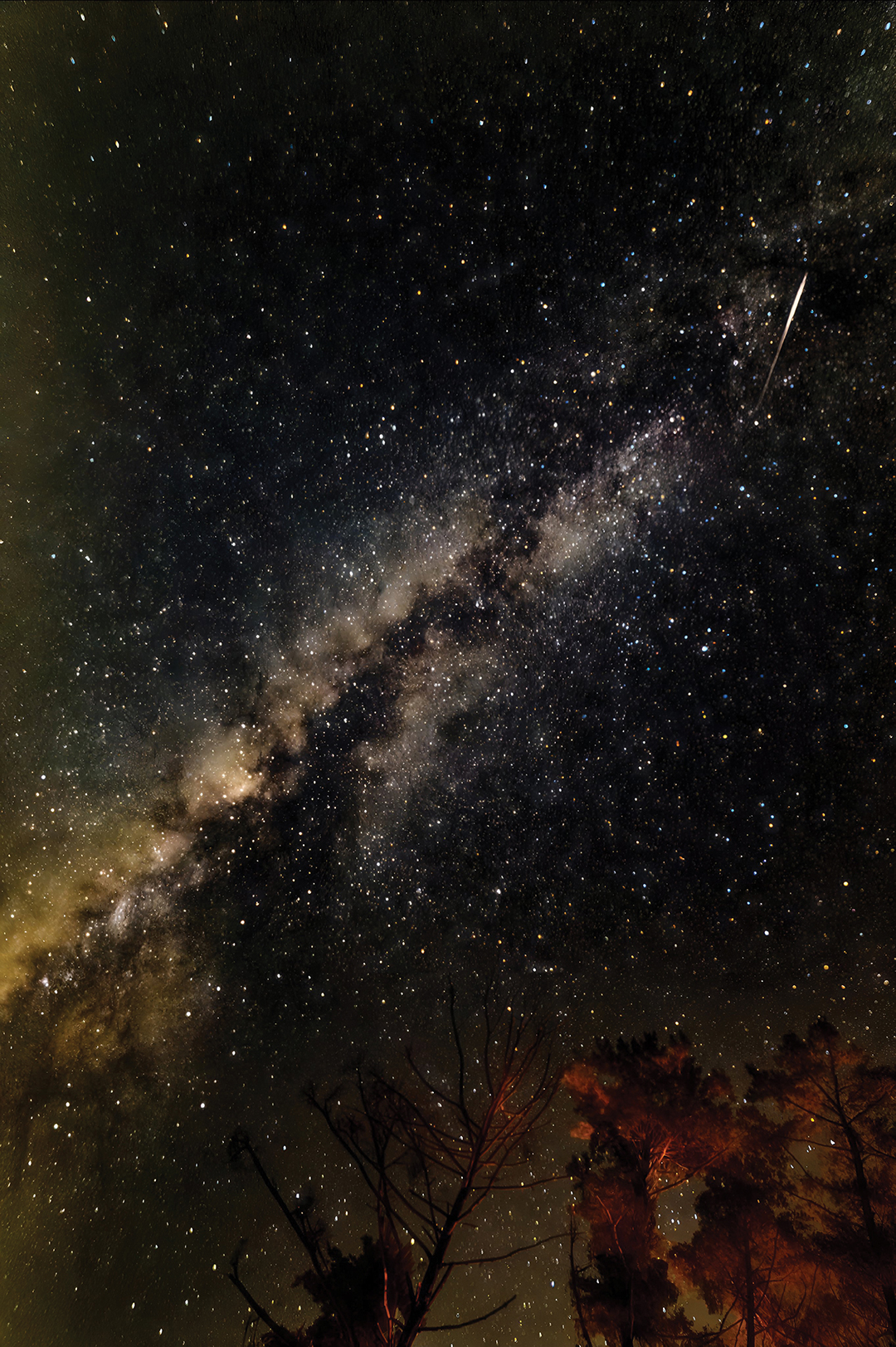
All you have to do is wait until sunset, tilt your head back, and enjoy the sight. Directly over your head is a spectacle as dazzling and pristine as anything you’d see on a 4D HD Television, a show now in its 4.5 billionth season. Plateau skies are not compromised by particulates in the air, or heat inversions, or, most damaging of all, light pollution. Set against our black velvet winter skies, it all takes on the dazzling clarity of a Tiffany’s window display.
Of course, it’s possible that your home is near a streetlight, or perhaps your neighbors have bright security lights that inhibit your sky-watching potential.
If that’s the case, consider these wonderful viewing sites – close by, panoramic, and black as a mineshaft at midnight.
If you live in Cashiers, it doesn’t get much easier than heading to The Village Green. The Commons area is perfect for stargazing. You can spread out a blanket, enjoy a late night snack or beverage, and lie on your back. It’s a languid way to enjoy the evening, unchanged since the Babylonian astronomer/priests of 5,000 B.C.E.
In Highlands, you can visit Sunset Rock, across from the Highlands Nature Center. Park your vehicle across from the Nature Center and hike the gentle road to the summit. Naturally, bring a flashlight. The road is slowly eroding, and you can twist your ankle if you’re not careful.
That flashlight will come in handy at the top, to ensure that you don’t plummet to your death. Plus, you don’t want to stumble (as I have) over a couple who are apparently enjoying one another more than the celestial view. That’s only happened to me once, though I’ve enjoyed the stars there dozens of times.
If, on the off chance that you don’t relish the idea of a speedy though relatively painless death, or you choose not to share your evening with hidden clusters of adults making out, really making out, consider Highlands Memorial Park, located on Highlands Memorial Park Road, just off of US 64.
This is a beautiful setting and offers a stunning view of the sky, all the way to the horizon. I’ve occasionally run into others enjoying the spectacle, but they’ve always been hushed and respectful.
Once you’ve settled in to your spot, you’ll be astonished at the sheer depth of the display. The Milky Way reveals itself as the faint band she’s always been, having all but vanished from most of the United States.
If you’re not sure what you’re gazing at, there are some splendid star map apps you can install on your phone. I’ve enjoyed Sky Map, although SkyView has an eerie soundtrack that can really enhance the star-watching experience.
And if the naked-eye experience just isn’t enough for you and you really want to take advantage of the pristine, black-velvet night, you may want to check out an 8-inch Orion Telescope from Albert Carlton-Cashiers Community Library. It’s available free of charge to anyone with a valid library card. Using this lightweight instrument, I’ve been able to clearly see Jupiter and its moons, Mars and its ice caps, and the Orion Nebula. If you really want to get lost amidst the stars, this is the tool for you.
If you’re still not sure that lying on your back in the middle of nature is for you, let me make an offer.
The heavens are setting the stage for a dazzling performance in 2026, and you’ll want front-row seats. Jupiter kicks off the year in January, striding across the night sky in all its brilliance, closer to Earth than at any other time. By late summer, Saturn follows suit, its rings tilted just so, like a grand dancer showing off a costume of light. And then, in September, Mars steals the spotlight — fiery, bold, and bright, rising at sunset and keeping us company all night long. It’s the kind of celestial drama that makes you want to linger outside just a little longer, neck craned, heart lifted.
Venus and Mercury, ever the quicksilver companions, add their own sparkle to the year. Venus glows in October evenings, a lantern hung low in the west, while Mercury peeks out in November mornings, a fleeting but delightful guest.
Together, these planetary rendezvous remind us that the sky is not static but alive – a theater of motion, mystery, and wonder.
So, grab a blanket, maybe a thermos of something warm.
Watch these shows with open eyes, an open mind and an open heart, and I promise you’ll be hooked.
If not, well, enjoy the rest of this issue of Laurel and be grateful that at least you didn’t fall off a cliff or stumble over some irate lovers.
photos by Philip Smith
@philipsmithphotography65


Favorites Count: 0