
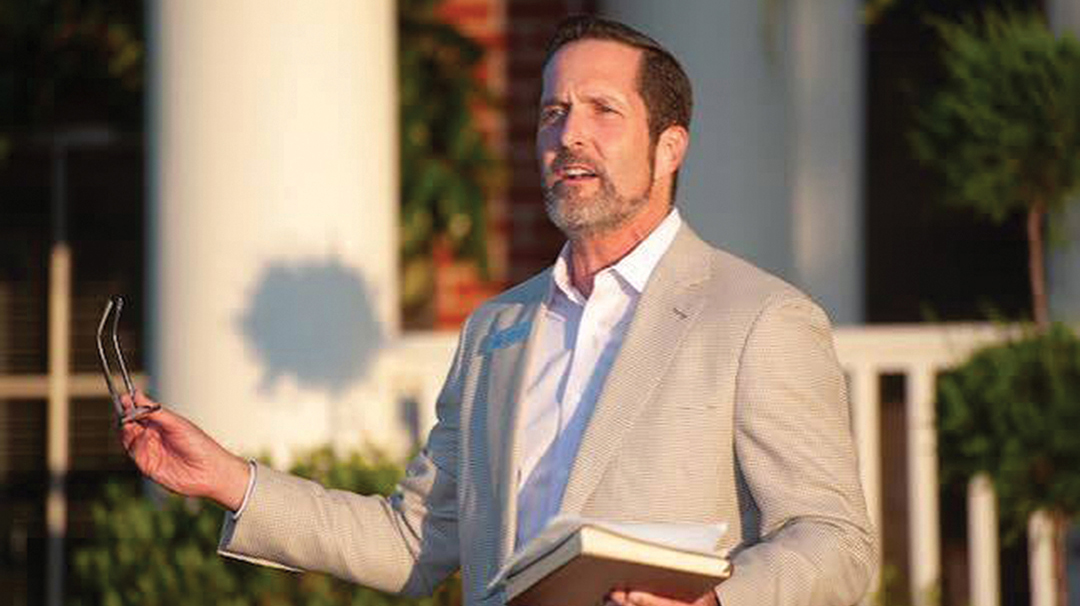
Dr. Myrle Grate serves as Executive Director of the Highlands-Cashiers Health Foundation, where he works with healthcare providers, hospitals, nonprofit organizations, and community leaders across Western North Carolina to strengthen access to primary care and behavioral health through strategic partnerships and philanthropy.
There are few places more beautiful than the Highlands-Cashiers Plateau.
People come here for cool summer mornings, waterfalls, hiking trails, and a sense of community that has defined this place for generations. Those of us who are fortunate enough to call the Plateau home also know that when a neighbor is in need, our community shows up to help.
One of the unexpected gifts of my work has been the opportunity to gather around conference tables with physicians, hospital leaders, clinic directors, behavioral health providers, county health workers, and nonprofit organizations from across Western North Carolina. Listening to their experiences has given me a deeper appreciation for the access we enjoy on the Plateau and a greater understanding of the fragility of rural health care.
Healthcare on the Plateau doesn’t exist in isolation. The same network of providers serving Highlands and Cashiers is connected to communities extending across Cherokee, Clay, Graham, Jackson, Macon, and Swain counties. When one part of that network struggles, the effects are felt throughout the region.
And the challenges are significant. Enticing physicians, nurses, counselors, and other healthcare professionals to rural communities has become increasingly difficult.
Recruiting a physician is rarely just about recruiting one person. It’s often about whether a spouse can find meaningful work, children have access to good schools, and a family can envision building a life in a rural community. Many providers naturally gravitate toward larger cities that offer higher salaries, broader professional networks, and more opportunities. Rural communities must work harder simply to compete.
Geography presents another challenge. In our mountains, twenty miles can easily become a 45-minute drive. For an older adult managing a chronic condition, a working parent seeking care for a child, or someone attending weekly counseling appointments, distance alone is a barrier to better health.
Some of our greatest shortfalls are in the area of behavioral healthcare. Throughout Western North Carolina, families often wait weeks or even months for counseling or psychiatric services, particularly for children and adolescents. Recent regional data identified provider shortages, transportation barriers, long wait times, and limited crisis resources as some of the greatest obstacles facing young people and their families.
Federal research further reinforces what local providers experience every day. Across Jackson, Macon, Cherokee, Clay, Graham, and Swain counties, each has been designated a Health Professional Shortage Area for both primary care, and behavioral health; several counties face the highest mental health shortage scores in North Carolina.
During one conversation, a healthcare provider told me about a family who drove nearly an hour each way so their child could receive behavioral health counseling. It wasn’t the quality of care that challenged them, it was simply getting there. In rural communities, distance often becomes the deciding factor in how and when folks receive care.
Yet amidst these struggles, our communities consistently display their resilience. Across our region, hospitals, federally qualified health centers, free clinics, schools, churches, and nonprofit organizations are finding creative ways to expand access to care. Providers are integrating behavioral health into primary care. Schools are bringing counselors closer to students. Community organizations are filling gaps where traditional systems cannot. These partnerships are making a real difference, even as demand continues to grow. The future of rural healthcare will depend on many things – talented providers, strong community partners, thoughtful public policy, and continued local investment. But perhaps most of all, it will depend on communities and people who believe access to quality healthcare is worth protecting.
We understand that caring for one another is not simply an act of kindness; it’s an investment in the future of our communities. As we look ahead, preserving access to quality healthcare for ourselves, our families, our neighbors, and for the generations that follow is one of the most important ways we honor and sustain the place we are fortunate to call home.


Favorites Count: 0