
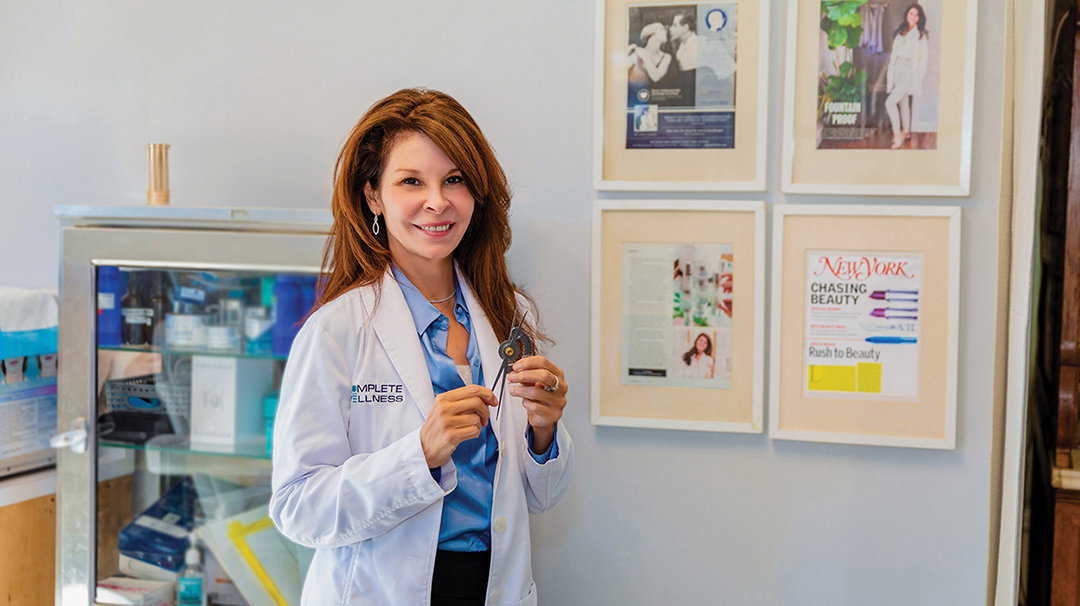
Dr. Anita Dormer
“I remember the exact moment I realized I was losing my hair. It was in that moment I began to lose myself,” she told me.
Again and again, this single moment—whether it’s a friend’s comment, a pillowcase covered with hair, a clogged shower drain, a brush, or the man in the mirror staring back at a thinning scalp—leads people to the same devastating realization:
I am going bald.
This story plays out in roughly half of men and women. Hair is deeply personal, tied to identity in ways we rarely acknowledge.
A historic example: during WWII, prisoners had their heads shaved to strip them of individuality and reduce them to a number. They were meant to lose their personhood—and that is exactly what hair loss feels like for many.
Hair is often the first thing people notice. It reflects our life stages, gender, health, and status. Ancient Egyptians, Greeks, and Western cultures used hair to signify beauty and social standing. Even the Bible calls hair a glory to a woman.
Yet science still struggles to fully understand why we lose hair—stress, genetics, medications, environmental damage, autoimmune issues. We know cells disappear from follicles, but not whether they die or migrate. The mechanisms remain unclear.
One major cause today is cancer treatment. How often do we see a woman in a scarf and immediately think, “She has cancer?”
Working with cancer patients, I’ve seen caretakers dismiss their loved ones’ fear of hair loss as superficial: “Why worry about your hair? You’re alive.” But losing control of your identity—the person others see and the person you see—is a unique grief only those losing their hair and eyebrows truly understand.
This is not vanity.
When I began treating hair loss, I also discovered most research focused on male pattern baldness, with far less attention on women. There is no gene overlap between the two, and the patterns differ entirely. Men typically lose hair at the frontal hairline and temples; women experience diffuse thinning on the top of the head.
The good news is that I believe we are making real progress toward solving baldness. A Japanese scientist recently grew hair on bald mice using three proteins to complete the full hair-growth cycle for the first time. This and other protein-signaling research may one day solve the issue within our lifetime.
Researchers have also identified the signal that turns hair gray and are working to turn it off. Imagine a future with no hair-color appointments.
While this research is still early, we already have a proven, widely accepted treatment for many forms of hair loss.
More than 50 years ago, platelet-rich plasma (PRP) derived from our own blood was used in wound healing and osteoarthritis. This area of regenerative medicine has expanded dramatically.
PRP has shown high satisfaction and improved quality of life in patients with female pattern hair loss (FPHL). Because it contains human growth factors and anti-inflammatory proteins, PRP can be used alone or with cold caps, topical medications, and even as a steroid-free therapy for alopecia areata.
Multiple meta-analyses from the NIH, Johns Hopkins, and Yale support PRP as a therapeutic option for androgenetic alopecia, female pattern hair loss, and in hair transplantation. It is considered safe, effective, steroid-sparing, and a strong alternative treatment.
The verdict: PRP slows hair loss, stimulates growth from dormant follicles (an average increase of 17–28 hairs per cm²), strengthens the scalp, and thickens existing hair.
By leveraging the body’s own healing abilities, PRP offers real hope for many hair-loss sufferers.
What to Expect
Results appear after several weeks for joint injections and around six months for scalp injections. Annual maintenance is required. Because PRP uses a patient’s own tissues, scalp injections—after numbing—are safe and can be used alone or alongside topicals, transplants, and other cosmetic procedures.
At Dr. Anita Medical Aesthetics in Cashiers, we offer a free consultation to discuss potential hair-loss treatments. Call (828) 998-2798 to schedule a complimentary appointment. I currently offer PRP for hair loss and for osteoarthritis of the knees.

In celebration of the new Stage4Hope cancer facility in Highlands—a collaboration with MD Anderson, Sloan Kettering, and Mayo Clinic—Dr. Anita will donate 20 percent of July–August proceeds to Stage4Hope (stage4hope.org). We hope this contribution helps preserve the dignity of all cancer patients until the cure for cancer, now on the horizon, is realized.
And in case you don’t know: It’s never really been just about the hair.
From the doctor and proud Southern belle,


Favorites Count: 0